Tile Patterns and Layouts: 8 Looks for Floors, Walls and Showers
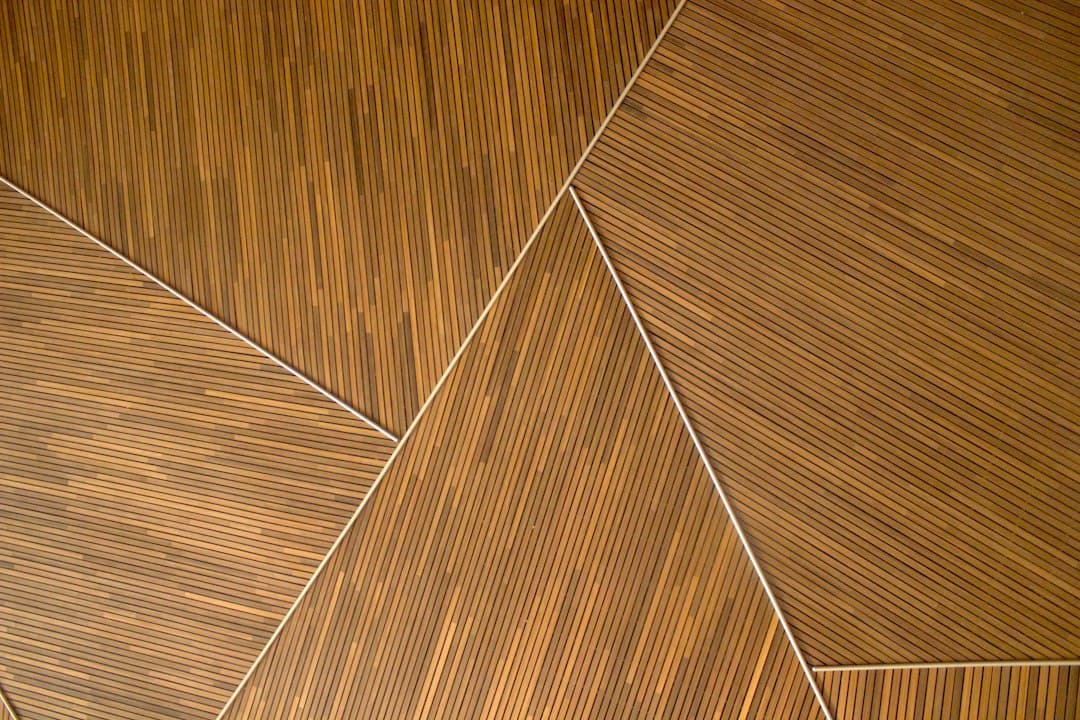
Tile patterns are the layouts used to set tile on a floor or wall, such as herringbone, hexagon, stacked or offset. This deep dive builds on our tile patterns Complete Guide with more detail on each look. The short answer: the pattern changes how big, busy or calm a room feels. It also changes how many cuts the installer makes, how much tile you buy and how long the job takes.
Here are 8 tile patterns and layouts we install around Greater Boston. For each one we cover the look, the rooms it suits and what it asks of the floor and the crew. Aguirre Modern Tile has set tile here since 2016 as a registered Massachusetts home improvement contractor (HIC #655072). You pick the tile. We handle the layout, the prep and the setting.
1. Tile Patterns and Layouts Start With the Room
The best pattern is the one that fits the room's size, light and use. A small bathroom floor, a long hallway and a shower wall each call for a different layout. Pick the room first, then the tile, then the pattern.
What Is a Tile Layout?
A tile layout is the plan for where every full tile and every cut tile lands. The pattern is the look. The layout is the math behind it. A good layout centers the pattern on the room and the doorway. It hides the smallest cuts under a vanity or along the least-seen wall.
Before you pick a pattern, look at these five things:
- Room size: Busy patterns like small hexagon or herringbone can feel crowded in a tight powder room. Large tile reads calmer.
- Light: Low light from a window skims across the floor. It shows every edge that sits higher than its neighbor.
- Traffic: Boston entryways take salt and sand all winter. Textured porcelain holds up best there.
- Tile shape: Planks, squares, hexes and subway tile each allow only certain patterns.
- Floor condition: Older Boston homes often have uneven wood subfloors. A straight grid shows that more than an offset layout does.
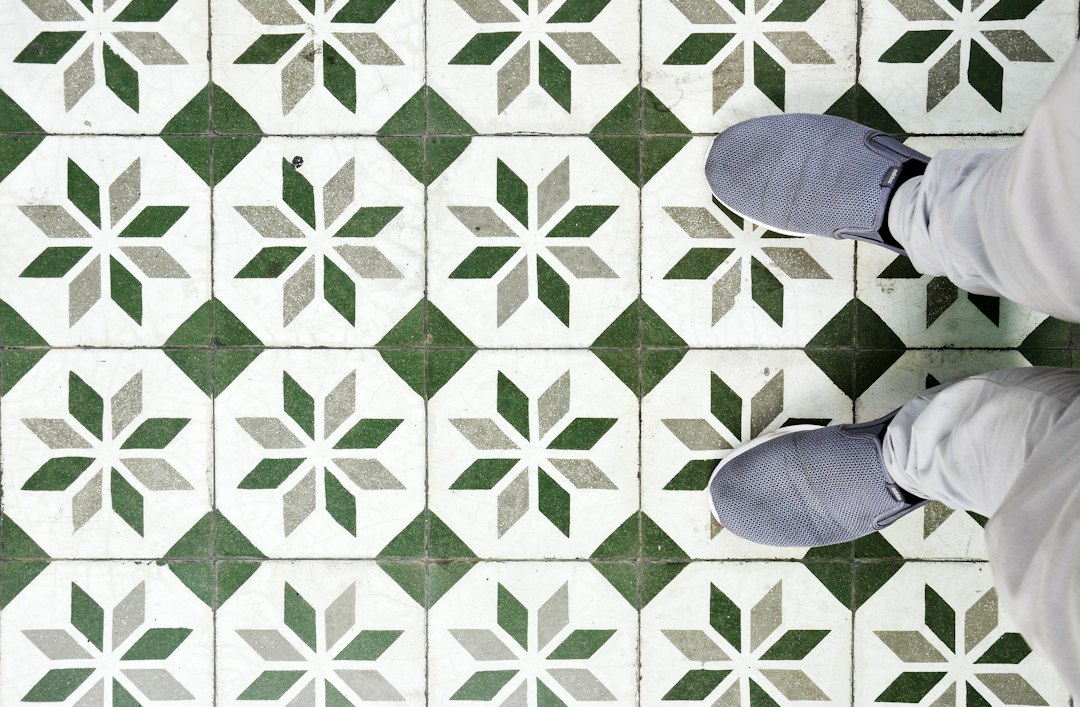
Planning a patterned bathroom floor? Send us photos of your bathroom floor and the tile you like and we will send a same-day estimate. Our recent bathroom floors of 30 to 45 sq ft, old floor removed, ran $2,000 to $2,300 (as of 2026 pricing). That covers labor and setting materials. You buy the tile, and we help you pick it.
2. Herringbone Floors Add Movement
Herringbone sets rectangular tiles in a V-shaped zigzag. It adds motion to a floor and can make a narrow hallway or bathroom feel wider. Homeowners ask us about it most for entryways, mudrooms, hallways and bathroom floors.
- Best tiles: wood-look porcelain planks, marble or porcelain in thin rectangles, and classic brick shapes.
- Best rooms: entryways, hallways, kitchens and bathroom floors with a clear focal wall.
- Extra tile: herringbone uses about 15 to 20% more tile than a straight lay because of the cuts at every wall, based on typical layout waste.
- Layout: we snap a center line and dry-lay the pattern first, so the points line up with the doorway.
Does Herringbone Tile Cost More to Install?
Yes. Every row ends in an angled cut at the wall, so the crew sets fewer square feet per day. A two-person crew sets roughly 100 sq ft of tile a day on a simple layout. Herringbone slows that pace down. We still price it from photos, not from a per-sq-ft formula. Our guide to a herringbone tile floor covers layout and cost in more depth.
3. Hexagon Tile Works Big or Small
Hexagon tile is a six-sided tile that locks together like a honeycomb. Small hex mosaics feel vintage and fit older Boston bathrooms. Large hexes feel modern and bold.
- Small hex (1 to 2 inch): comes on mesh-mounted sheets. Lots of grout lines give good grip underfoot. Porcelain hex mosaic runs about $10 per sq ft for the tile, based on current Boston-area material prices.
- Large hex (8 inch and up): fewer grout lines and a bolder look. Good for bathroom floors and entries.
- Grout color: contrast grout shows off the honeycomb. Matching grout lets the shape fade back. We use Laticrete Permacolor.
- Transitions: where hex meets another floor, we finish the edge with metal trim. We finish the trim to match the grout color.
Is Hexagon Tile Good for a Shower Floor?
Yes. Small hex mosaic is one of the best shower floor choices. The many grout lines add grip, and small tiles follow the slope to the drain. We set it over a Schluter Kerdi tray and connect the Kerdi drain ourselves. See more layouts in our hexagon tile ideas guide.
4. Vertical or Horizontal? Direction Changes the Room
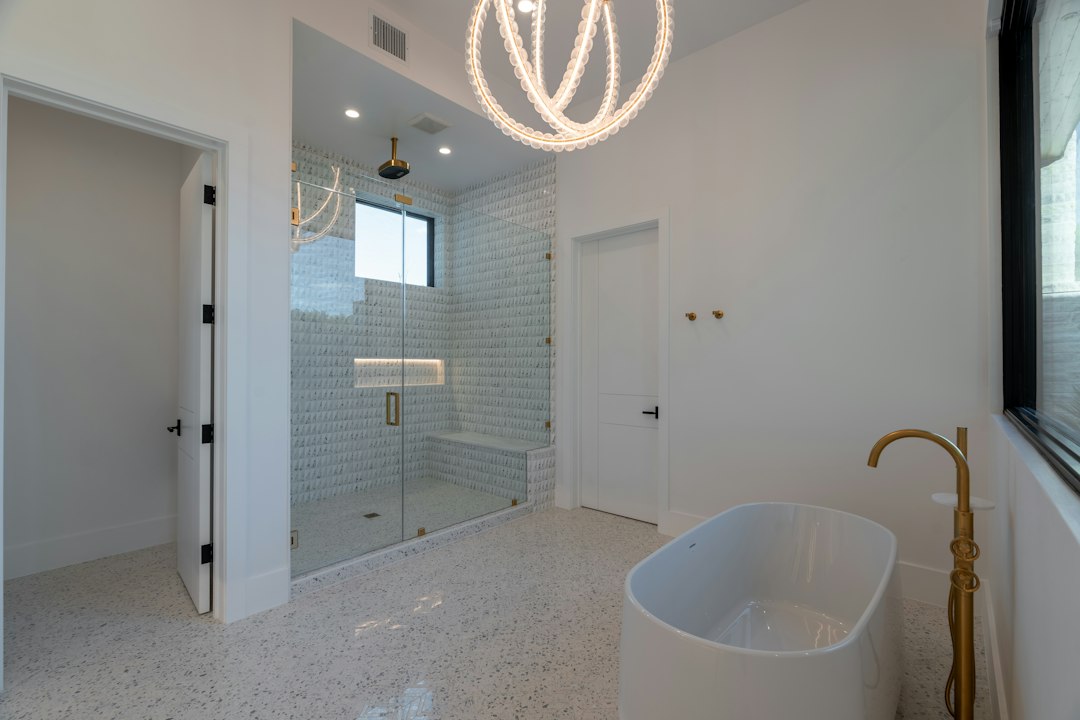
Running rectangular tile up the wall makes a room look taller. Running it across the wall makes a room look wider. That one choice changes a shower more than most people expect.
Vertical vs Horizontal Tile
- Vertical: draws the eye up. Good for low ceilings and narrow showers. Looks modern, especially when stacked.
- Horizontal: widens a small bathroom. Classic with subway tile in a running bond.
- Stacked: every joint lines up. It needs flat, plumb walls because it shows every flaw.
- Offset: joints step over each row. It is more forgiving on older walls.
Compare the two side by side in our post on vertical vs horizontal tile. It also covers which way to run large format tile on shower walls.
5. Large Format Layouts Keep It Calm
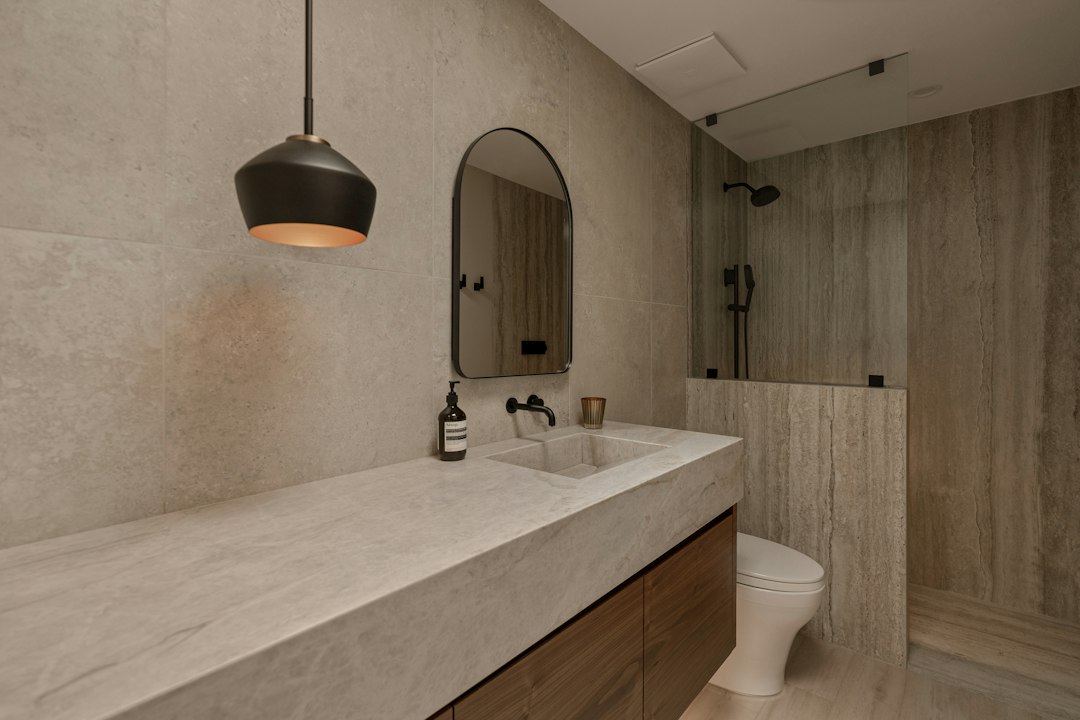
Large format tile is tile with at least one side 15 inches or longer, such as 12x24, 24x24 and 24x48. Fewer grout lines make a floor look bigger and cleaner. The tradeoff is that the floor must be very flat.
- 1/3 offset: the go-to layout for 12x24 tile. It lowers the risk of uneven edges from slight tile bow.
- Straight stack: the most modern look. It needs the flattest floor of any pattern.
- Leveling clips: clip-and-wedge systems hold edges flush while the thinset cures.
- Back-buttering: we spread thinset on the floor and the back of each tile to reach 95% or better coverage.
- Floor prep: self-leveling compound over an uneven slab adds about $2 to $5 per sq ft, based on current Greater Boston rates.
For offset choices by tile size, read 12x24 tile installation patterns. If you are still deciding on size, our large format tile pros and cons post weighs big tile against small tile.
6. Offset, Diagonal and Basketweave Patterns
These classic tile patterns still suit many Greater Boston homes. Each one has its own look and its own waste factor. Plan the extra tile before you order.
- Running bond (1/2 offset): the classic subway look. Best on walls and with small tile.
- 1/3 offset: the safer offset for long planks and 12x24 tile.
- Diagonal (45 degrees): square tile turned on point. It makes small rooms feel larger and hides walls that are not square. Plan on about 10 to 15% more tile for the extra cuts.
- Basketweave: pairs of rectangles that switch direction. A classic look in traditional New England homes.
- Versailles: four tile sizes in a repeating set. Common with travertine. It needs careful layout planning.
- Pattern on the tile: cement and encaustic tile carry the pattern on the face. The layout stays a simple grid.
Herringbone vs Chevron
- Herringbone: square-ended rectangles meet in a staggered zigzag. It looks classic.
- Chevron: tile ends are cut at an angle, so the points meet in one clean line. It looks sharper and more modern.
- Install: both need a center line and a dry layout. Chevron needs exact angled tile, so many people buy it pre-cut.
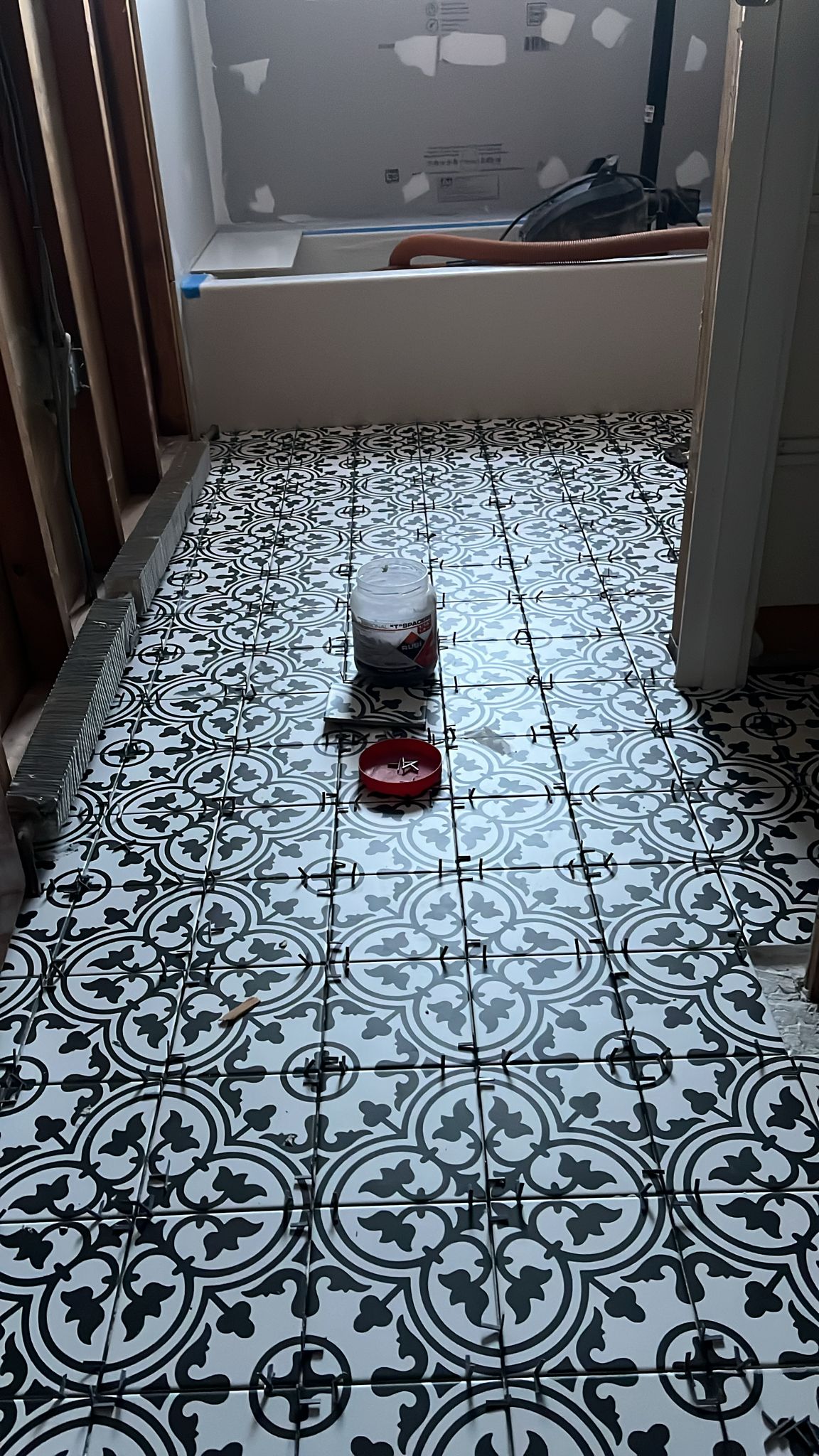
Cement and encaustic tile is porous. It needs a penetrating sealer before grout and again after. Skip that step and grout can stain the face for good.
7. What Your Tile Pattern Does to the Price
The pattern does not change the price of a box of tile. It changes how much tile you buy and how long the crew takes. We price each area from photos and our per-area estimate, not a per-sq-ft formula.
Tile type | Typical tile cost per sq ft | Patterns it suits | What to plan for |
|---|---|---|---|
Ceramic floor tile | About $3 | Straight lay, diagonal | Light to moderate traffic only |
Porcelain 12x24 (Daltile, Marazzi) | About $6 | 1/3 offset, straight stack | Flat floor and leveling clips |
Wood-look porcelain plank, 6x36 or 8x48 (MSI, Marazzi) | About $8 | 1/3 offset, herringbone | Polymer-modified thinset and back-buttering |
Porcelain hex mosaic | About $10 | Hexagon | More grout lines to clean |
Large format porcelain 24x48 | About $10 | Straight stack, 1/3 offset | The flattest floor of all |
Cement or encaustic tile | About $16 | Grid with the pattern on the tile | Sealing before and after grout |
Tile costs above are based on current Boston-area material prices. You buy the tile directly, and we never mark it up. Here are our recent whole-job ranges (as of 2026 pricing, labor and setting materials included, tile not included):
- Bathroom floor, 30 to 45 sq ft, old floor removed: $2,000 to $2,300
- Kitchen backsplash, 17 to 35 sq ft, old one removed: $1,100 to $2,500
- Tub surround tear-out and retile, about 60 to 80 sq ft: $4,300 to $5,000, plus about $400 for a recessed niche
- Full shower tear-out and rebuild: $5,000 to $7,000+
- Bathroom floor plus shower in one job: $7,500 to $11,500
A complex pattern like herringbone or a small hex mosaic tends to push a job toward the top of its range. A simple grid or offset tends to land lower. Plumbing, electrical and glass are extra.
How Long Does a Patterned Tile Floor Take?
Most bathrooms take 2 to 5 working days with our two-person crew. A straight lay moves fastest. Herringbone, diagonal and small mosaics add cutting time. Thinset and grout also need time to cure between steps.
8. Get Your Tile Pattern Priced From Photos
The right tile pattern fits your room, your tile and your floor. Send us photos of the space and a link to the tile you like. We will tell you which tile patterns will work and what prep the floor needs. Then we write a per-area estimate, so you can do the shower now and the floor later.
Ready to see your tile pattern on the floor? Send photos for a same-day estimate from Aguirre Modern Tile. We are fully insured with $1M in liability coverage and registered as MA HIC #655072. A deposit holds your start date, and the balance is due when the job is done.
Frequently Asked Questions
What is the most popular tile pattern for floors?▾
Which tile pattern makes a small bathroom look bigger?▾
How much extra tile should I buy for a herringbone or diagonal pattern?▾
Does the tile pattern change the installation price?▾
Do you supply the tile?▾
Need Floor Tile Installation?
Send us photos and get a same-day estimate.