How to Choose Grout Color: 7 Rules From a Tile Installer
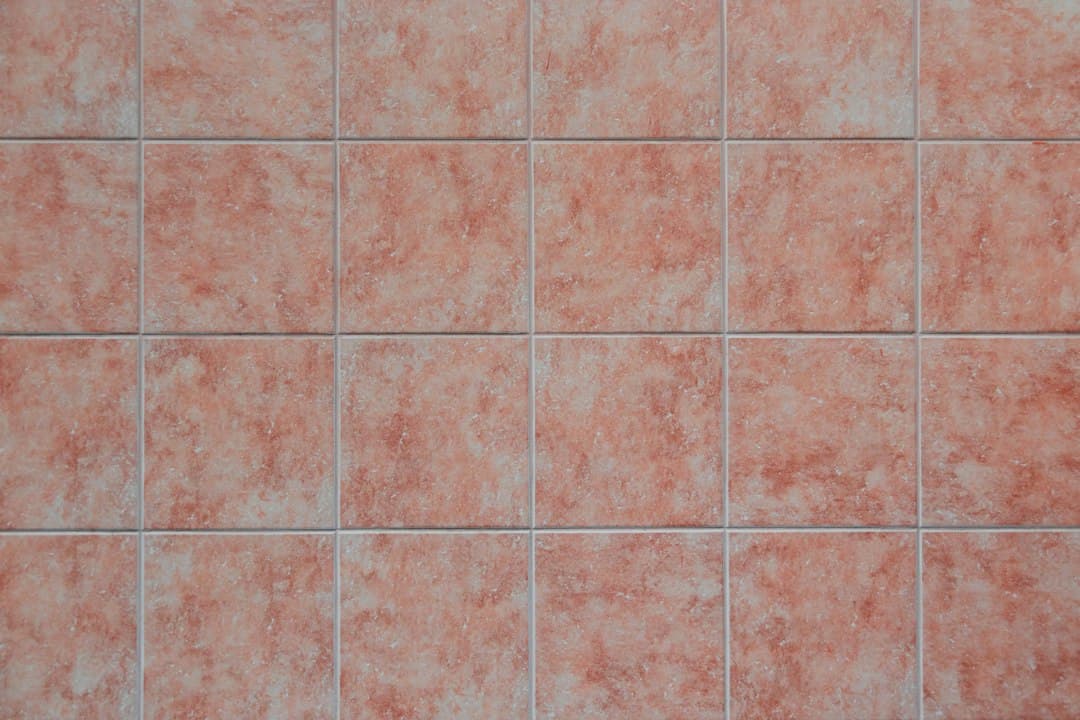
Grout color is the shade of the cement or epoxy filler between tiles. It decides whether your tile reads as one smooth surface or a grid of outlined shapes. Here is how to choose grout color in one line: match the grout to the tile when you want a calm, seamless look. Contrast it when you want the pattern to stand out. On floors, go a shade darker than the tile to hide dirt. Below are 7 rules we use on every job.
Back to How to Choose Tile · Tile Ideas Complete Guide
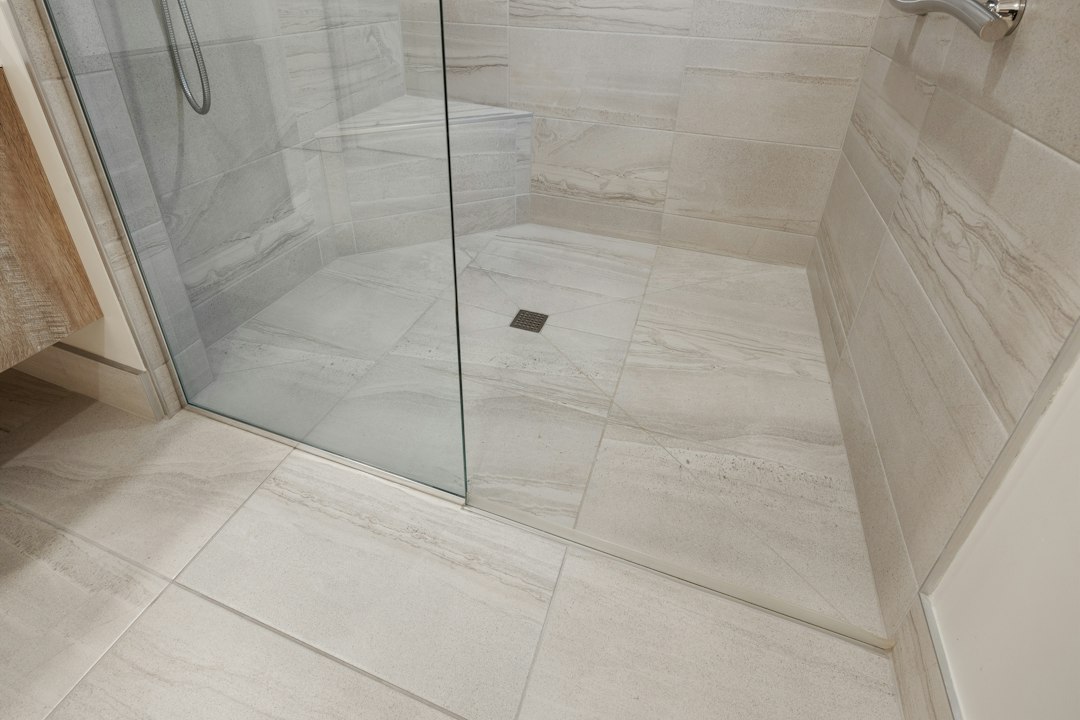
Holding a tile sample and a grout chart for a shower or backsplash? Send us a photo of both with your room. We will suggest a grout color and send a same-day install estimate.
1. Decide First: Blend In or Outline
Every grout choice starts with one question. Do you want to see the grout lines or not?
- Blend (match): grout close to the tile color. The wall or floor looks bigger and quieter.
- Outline (contrast): grout much lighter or darker than the tile. Every tile shape shows.
- Soft contrast: one or two shades off. Some definition, no hard grid.
Should grout be lighter or darker than tile?
For most floors, go slightly darker. Darker grout hides foot traffic and cleaning lines. On walls, either works. Lighter grout on a wall feels airy, and darker grout feels graphic.
2. Match Grout on Large-Format and Marble-Look Tile
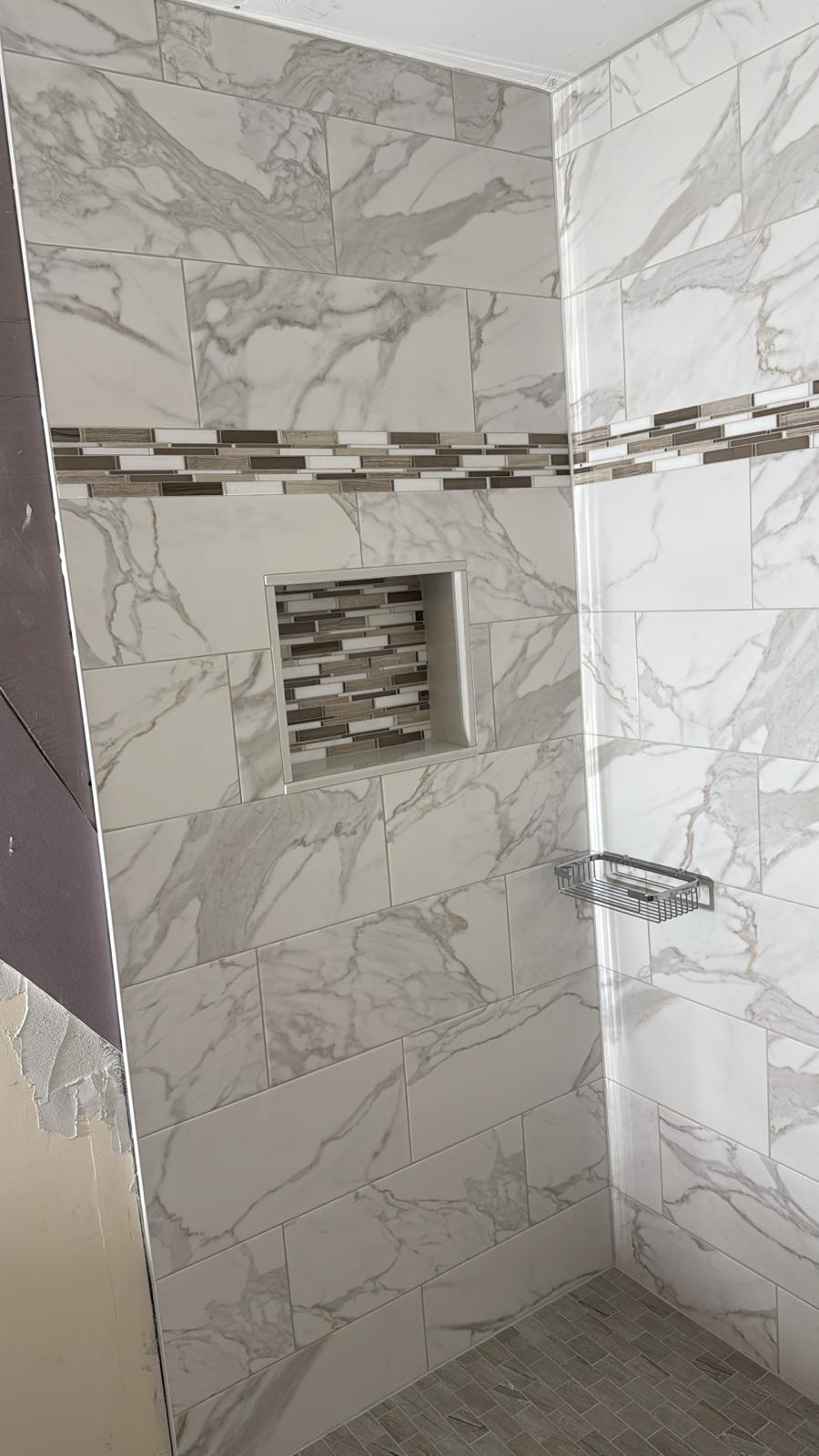
Big tiles and stone looks want to hide their joints. A matched grout lets the veining flow from tile to tile.
- Large-format porcelain (24x48 and up): match the background color.
- Marble-look porcelain: match the white or gray base, not the veins.
- Real marble: match closely and keep joints tight. See marble look porcelain vs marble for the stone vs porcelain trade-offs.
- Small bathrooms: matched grout makes the room feel larger.
3. Use Contrast to Show Off a Pattern
If you paid for a pattern, let people see it. Contrast grout turns the layout into the design.
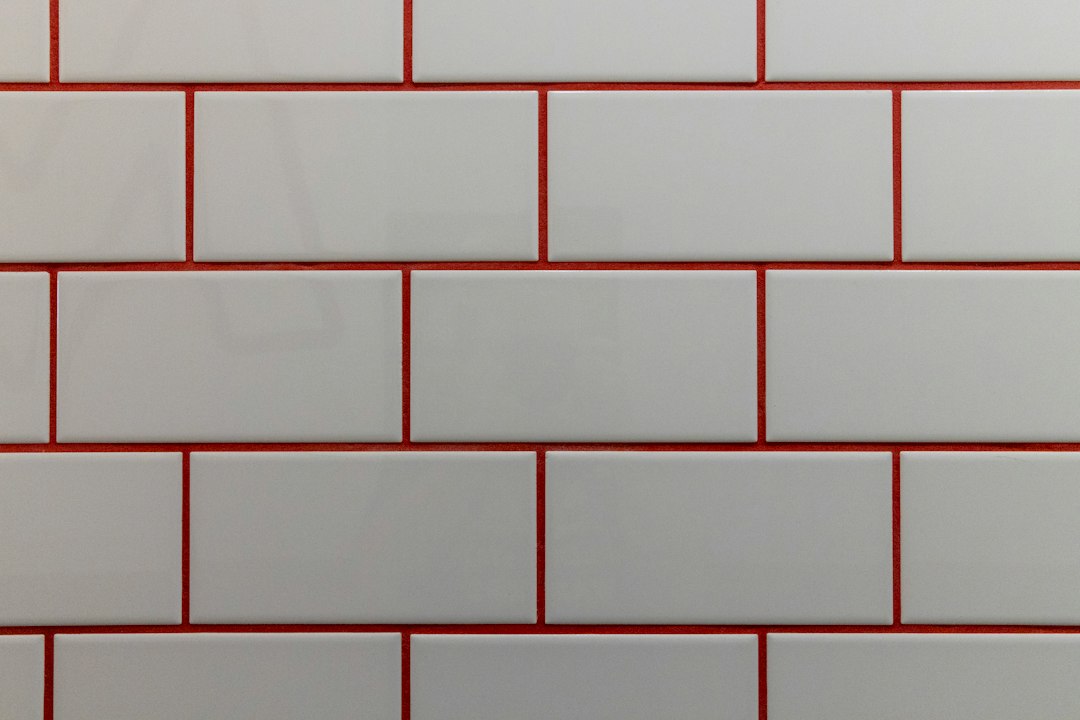
- White subway with charcoal grout: the classic graphic look.
- Herringbone and chevron: a darker grout shows the zigzag.
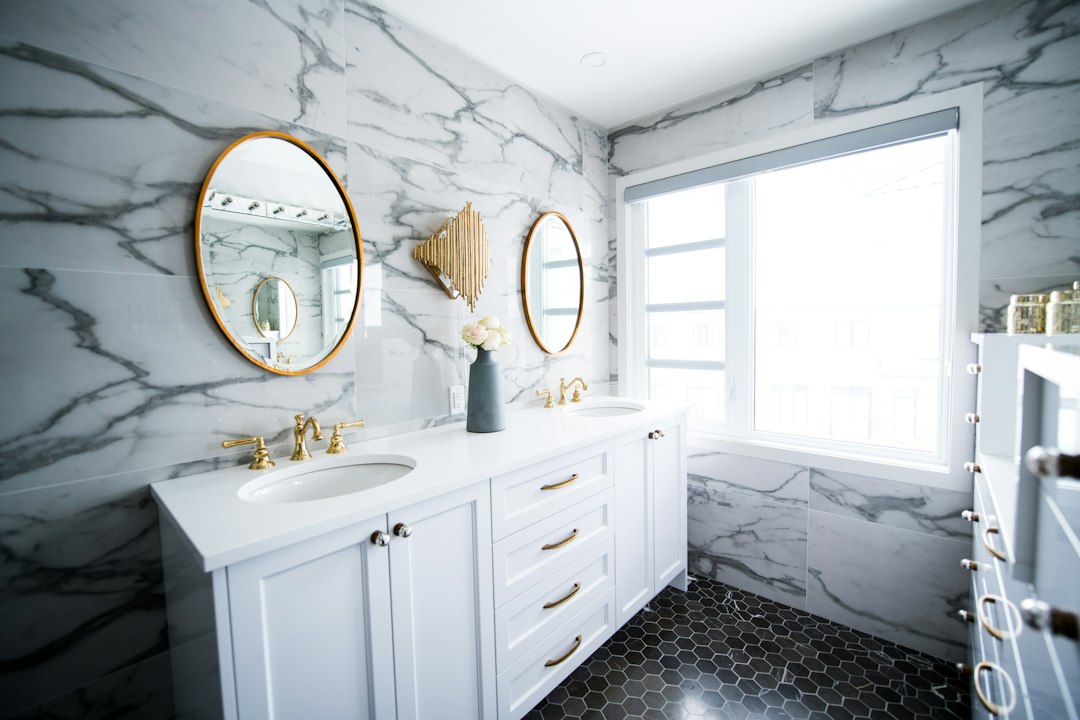
- Hexagon and penny mosaic: contrast shows each shape; matching gives texture.
- Encaustic and patterned tile: pick a grout that matches the main background color, so the pattern stays the star.
4. Go a Shade Darker on Floors
Floors take dirt, boots and mop water. Bright white grout on a floor looks great on day one and gray by year two.
- Bathroom floors: a light or mid gray hides wear better than bright white.
- Entryways and mudrooms: go darker. Greater Boston winters bring salt and sand.
- Shower floors: mid tones hide soap film and hard-water marks.
Is white grout a bad idea in a shower?
Not on the walls. White grout on shower walls stays clean with normal care. On a shower floor, it shows soap and minerals fast. We usually suggest a soft gray there instead.
5. Test Grout Samples on the Real Tile
Grout dries lighter or darker than it looks on a chart. Lighting in your room changes it too.
- Hold the color stick or sample against the actual tile, in the actual room.
- Look at it in daylight and at night under your own bulbs.
- Check it next to the vanity, cabinets or countertop.
- Pick two finalists. We can make a small test board on site.
6. Match the Metal Edge to the Grout
The metal edge trim on outside corners, niches and tile edges should match the grout, not fight it. We finish the metal edge to match the grout color you pick. That way the edges look planned.
- White or light gray grout: a bright or brushed finish.
- Dark grout: a matte black or dark finish.
- Warm grout (beige, bone): a warm-toned finish.
7. Choose a Grout That Holds Its Color
A great color only matters if it stays even. Patchy, blotchy grout ruins a good tile job.
- We use Laticrete Permacolor on our jobs. It is built for even color and stain resistance.
- Joint width changes how strong a color looks. Wide joints show more grout.
- Inside corners and the joint where walls meet the tub or floor get caulk, not grout. We match the caulk color too.
If your grout is already stained, cracked or moldy, a regrout may beat a full redo.
Grout color combos that work
These pairings come up again and again on our jobs. They are a safe place to start.
- White subway tile + white grout: clean and classic, best for walls.
- White subway tile + mid gray grout: soft definition, and it hides more dirt.
- White subway tile + charcoal grout: bold, graphic, modern farmhouse look.
- Marble-look porcelain + light gray or white grout: match the base, let the veins flow.
- Wood-look plank + a grout close to the wood tone: the lines fade and the floor reads like boards.
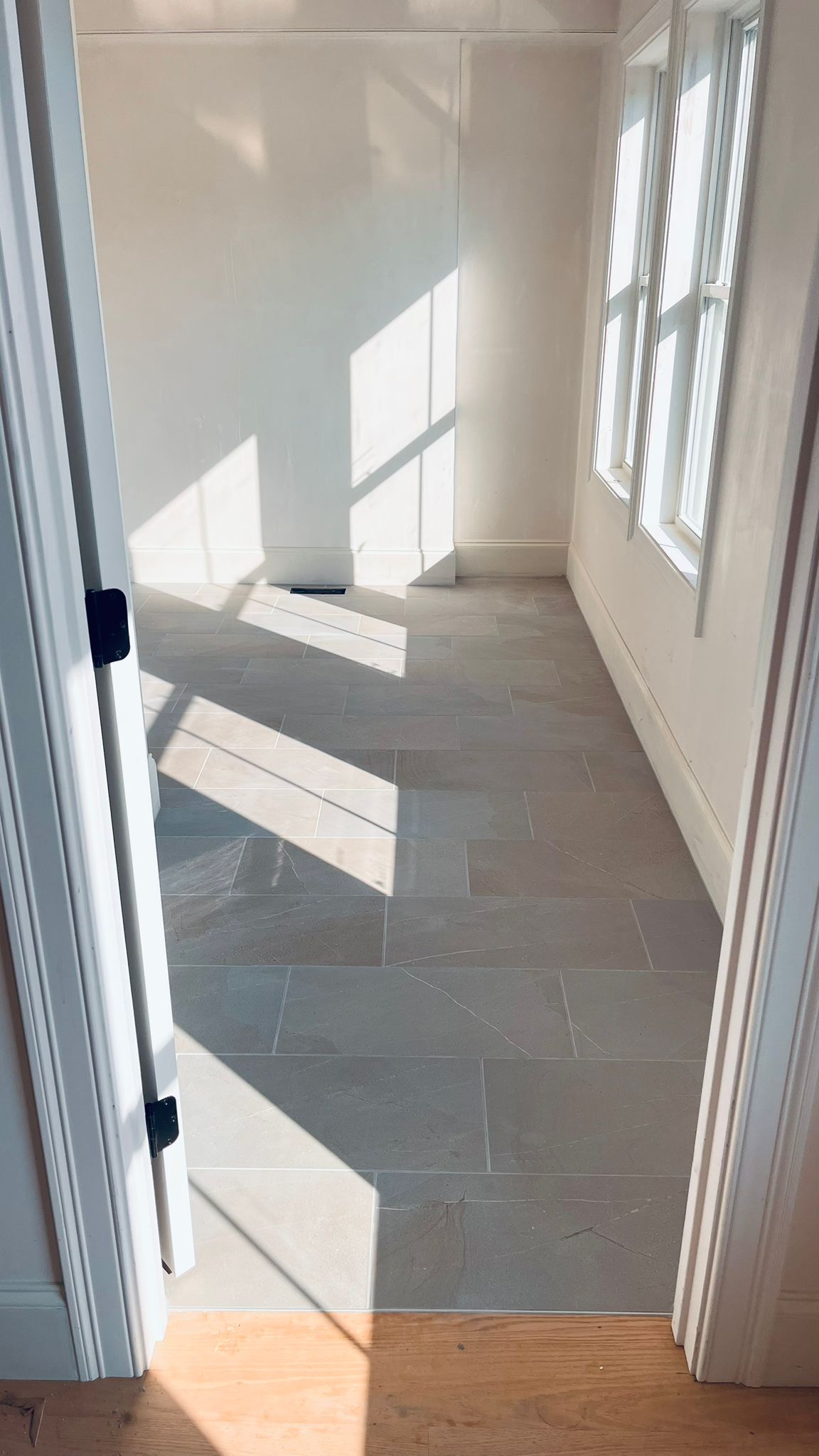
- Slate or stone-look floor + dark gray grout: earthy and very forgiving.
- Zellige or glossy color tile + a soft white or bone grout: lets the glaze shine.
Grout color mistakes to avoid
- Picking from a printed chart. Screens and paper never show true color.
- Bright white on a floor. It rarely stays bright.
- Contrast on busy tile. Patterned or heavily veined tile plus contrast grout looks cluttered.
- Forgetting the caulk. Corner caulk in the wrong color stands out. Match it to the grout.
What It Costs to Install
Grout color does not change our price. The room and the prep do. These are our recent ranges, labor and setting materials included, tile not included (based on current Greater Boston rates):
- Re-grout and re-caulk an existing shower: $700 to $1,800, depending on size and how much old grout must come out.
- Kitchen backsplash, 17 to 35 sq ft: $1,100 to $2,500, including removing the old one.
- Bathroom floor, 30 to 45 sq ft, old floor removed: $2,000 to $2,300.
- Tub surround tear-out and retile, about 60 to 80 sq ft: $4,300 to $5,000.
- Full shower tear-out and rebuild: $5,000 to $7,000+.
How We Install It
Good grout sits on a solid, dry build. Shower walls get RedGard waterproofing. Shower floors go on a Schluter Kerdi tray with a Kerdi drain we connect ourselves. Bathroom floors go over Strata Mat uncoupling membrane. Then we grout with Permacolor, clean the haze and caulk the corners. A two-person crew sets roughly 100 sq ft of tile a day.
Get a Quote From Photos
We are a registered Massachusetts home improvement contractor (HIC #655072), fully insured, and setting tile since 2016. You buy the tile; we bring the setting materials and grout, and we help you pick the color. Know how to choose grout color now but want a second opinion? Send us photos of your tile and room for a same-day estimate.