Porcelain vs Ceramic Tile: Which One Belongs in Your Bathroom?
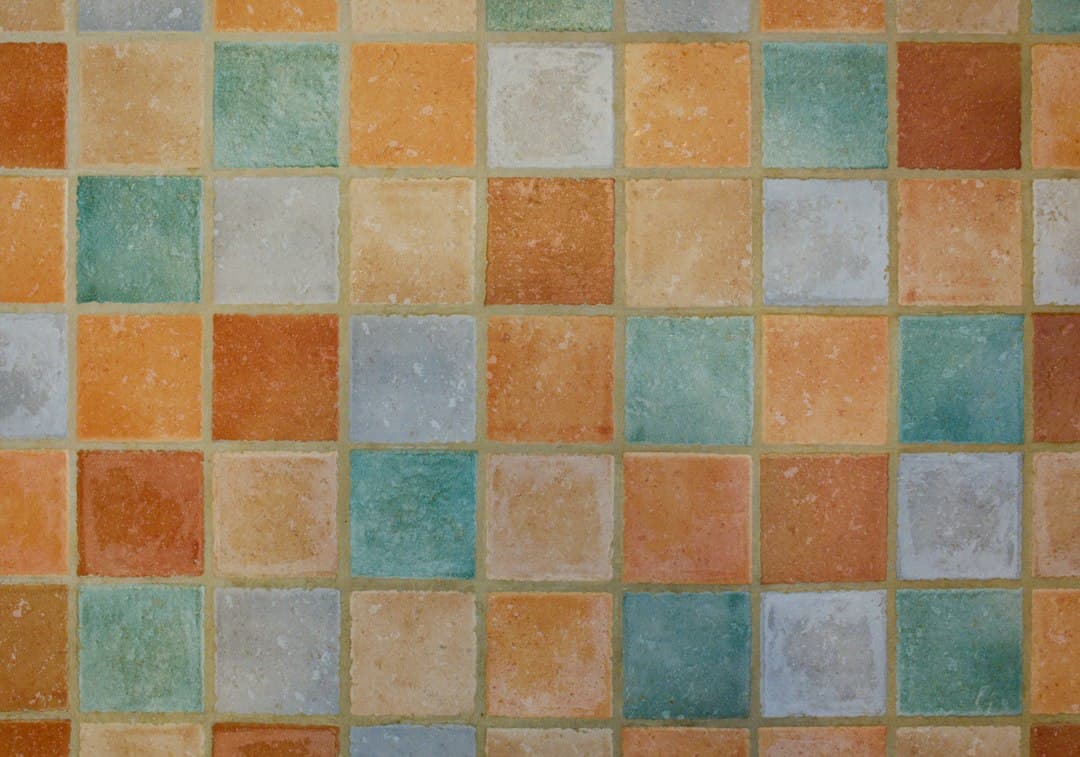
Porcelain vs ceramic tile is the choice between a dense, low-absorption fired clay tile and a softer, lighter one that costs less and cuts easier. Choosing between porcelain and ceramic? Use porcelain for floors, shower floors and entryways. Use ceramic for walls, tub surrounds and backsplashes, where it saves money and looks just as good. Porcelain costs about $7 per sq ft and ceramic about $4 per sq ft for the tile itself (as of 2026 pricing). Our install price barely changes between them.
Back to How to Choose Tile · Tile Ideas Complete Guide
Key Takeaways
- Porcelain absorbs less water: ANSI A137.1 defines porcelain as tile that absorbs 0.5% or less of its weight in water.
- PEI rating matters on floors: most home floors need PEI 3 or higher on the 0-5 wear scale.
- Ceramic is cheaper and easier to cut: about $4 vs $7 per sq ft for the tile.
- Both work on shower walls when the wall behind them is waterproofed.
- You buy the tile; we install it with the same waterproofing and setting materials either way.
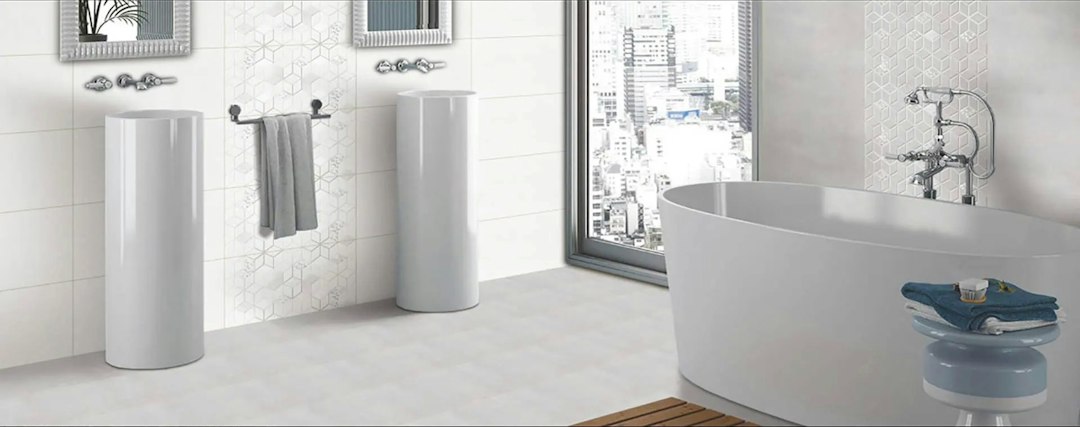
Stuck between two samples for a bathroom floor or shower wall? Send us photos of the room and both tiles. We will tell you which one fits and send a same-day install estimate.
Porcelain vs Ceramic Tile: What Is the Real Difference?
Both are clay tiles fired in a kiln. Porcelain uses finer, denser clay and fires hotter. That makes it harder, heavier and less thirsty. Ceramic uses a coarser clay body and is usually glazed on top.
Feature | Porcelain (e.g., Marazzi, Crossville) | Ceramic (e.g., Daltile, American Olean) |
|---|---|---|
Water absorption | 0.5% or less (ANSI A137.1) | Higher; many wall tiles are well above 3% |
Material cost | About $7/sq ft; large format about $10 | About $4/sq ft; subway about $5 |
Hardness | Very hard, scratch-resistant | Softer, chips more easily |
Cutting | Wet saw with a good blade | Snaps on a basic tile cutter |
Freeze-thaw | Frost-resistant grades exist | Indoor use only |
Best for | Floors, shower floors, entryways, outdoors | Walls, backsplashes, tub surrounds |
Material costs come from our service data (as of 2026 pricing). The Tile Council of North America (TCNA) publishes the ANSI standards that define each tile type.
What is a PEI rating?
A PEI rating is a wear score from the Porcelain Enamel Institute test, on a scale of 0 to 5. It tells you how well a glazed surface stands up to foot traffic. PEI 1 and 2 are for walls only. PEI 3 suits most home floors, and PEI 4 and 5 handle busy entries and commercial floors.
Porcelain vs Ceramic for Floors
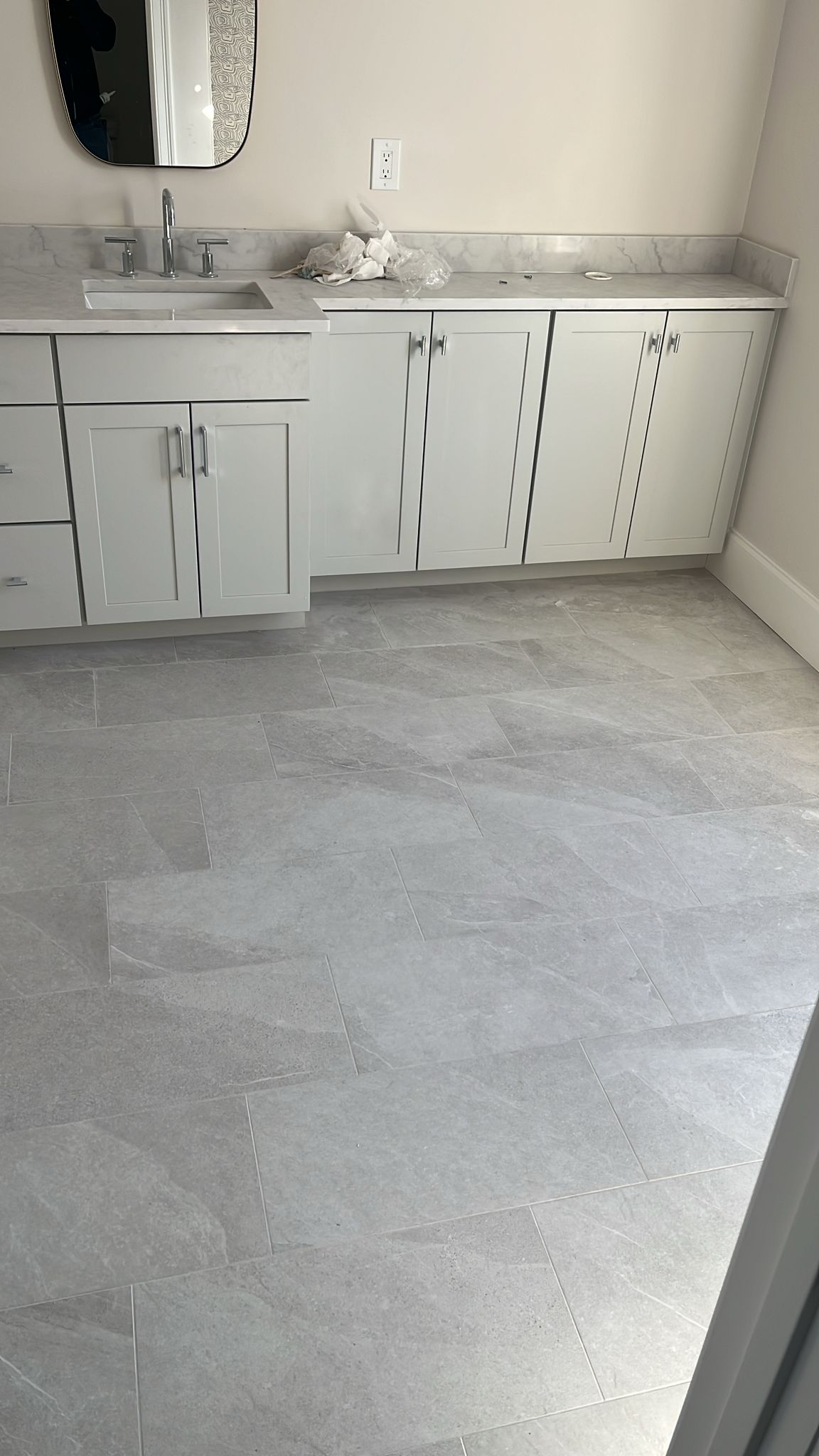
Porcelain wins on floors. It shrugs off boots, chairs and dropped shampoo bottles. In Greater Boston, salt and sand come in all winter, so we steer entries and mudrooms to porcelain every time.
- Porcelain pros: dense, hard, low absorption, many slip-rated matte finishes.
- Porcelain cons: heavier, harder to cut, costs more per sq ft.
- Ceramic pros: cheaper, lighter, huge color range.
- Ceramic cons: many lines are rated for walls only; chips show the clay underneath.
For slip, check the box for a wet DCOF of 0.42 or higher, the ANSI A326.3 mark for level interior floors that get wet. Our guide to matte vs glossy tile covers finish and grip in more detail.
Porcelain vs Ceramic for Shower Walls and Backsplashes
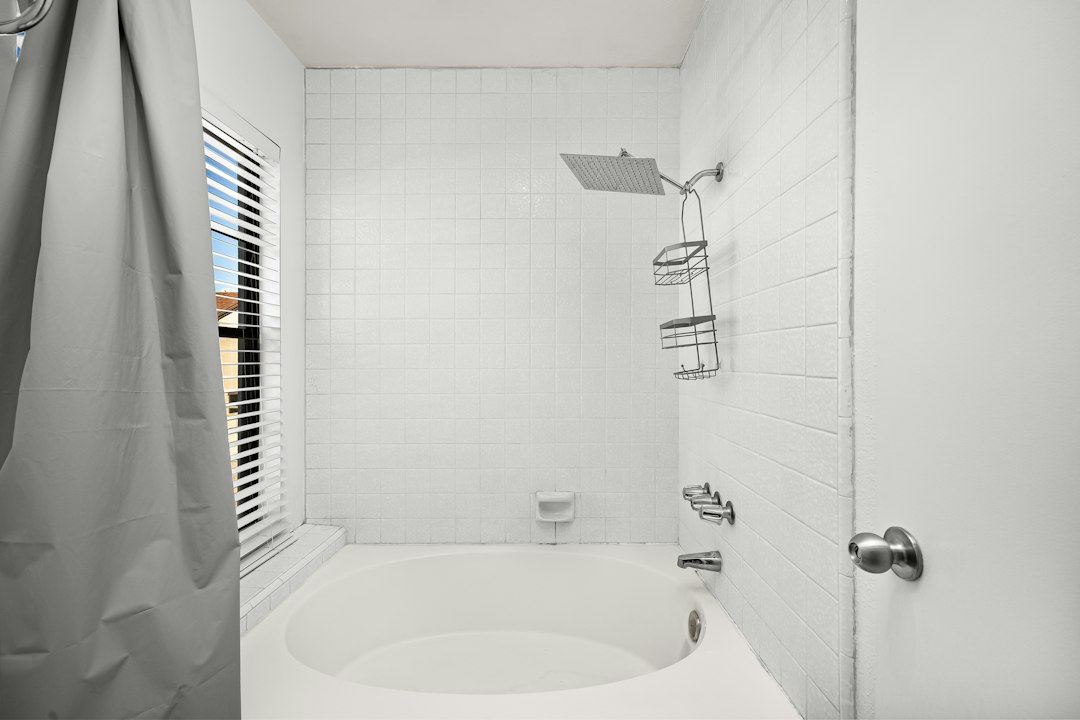
On walls, both work well. The waterproofing behind the tile keeps the wall dry, not the tile. So on walls, choose by look and budget.
- Ceramic subway is the classic, low-cost pick for tub surrounds and backsplashes.
- Large-format porcelain (24x48 and up) means fewer grout lines on shower walls.
- Marble-look porcelain gives a stone look with no sealing. See marble look porcelain vs marble.
- Glazed ceramic often has brighter, deeper colors than porcelain.
Porcelain vs Ceramic for Kitchens and Entryways
Kitchens and entries take the hardest use in a Massachusetts home. Use porcelain on these floors. Ceramic still has a place on the kitchen wall.
- Kitchen floor: porcelain. It handles dropped pans, chairs and spills.
- Kitchen backsplash: ceramic or porcelain. Ceramic gives more glaze colors for less money.
- Entryway and mudroom: porcelain, matte finish. Salt and sand scratch soft glazes.
- Outdoor steps or patios: frost-resistant porcelain only. Ceramic can crack in a freeze-thaw winter.
Mistakes we see when homeowners pick tile
Most tile regrets start at the store, not on install day. These are the ones we see most on the jobs we have done since 2016.
- Wall tile on a floor. A wall-only ceramic tile will chip and wear on a floor. Check the box for a floor rating.
- Glossy tile on a shower floor. It is slippery when wet. Pick a matte or textured finish.
- Not enough tile. Order about 10% extra for straight layouts and more for herringbone. Keep a box for repairs.
- Mixed lots. Boxes from different production runs can differ in shade. Buy it all at once.
- Skipping a sample. Tile looks different in your own light. Take one home first.
What It Costs to Install Porcelain or Ceramic Tile
Install cost depends on the room and the prep, not on porcelain vs ceramic. These are our recent ranges, labor and setting materials included, tile not included (based on current Greater Boston rates):
- Kitchen backsplash, 17 to 35 sq ft: $1,100 to $2,500, including removing the old one.
- Bathroom floor, 30 to 45 sq ft, old floor removed: $2,000 to $2,300.
- Tub surround tear-out and retile, about 60 to 80 sq ft: $4,300 to $5,000. Add about $400 for a recessed niche.
- Full shower tear-out and rebuild: $5,000 to $7,000+.
- Bathroom floor plus shower in one job: $7,500 to $11,500.
Large porcelain panels and small mosaics can push a job toward the top of its range. They take more handling, cutting or flattening. Tile rip-out jobs carry a $450 disposal fee.
How We Install It
We set porcelain and ceramic on the same proven systems. Only the cutting tools change.
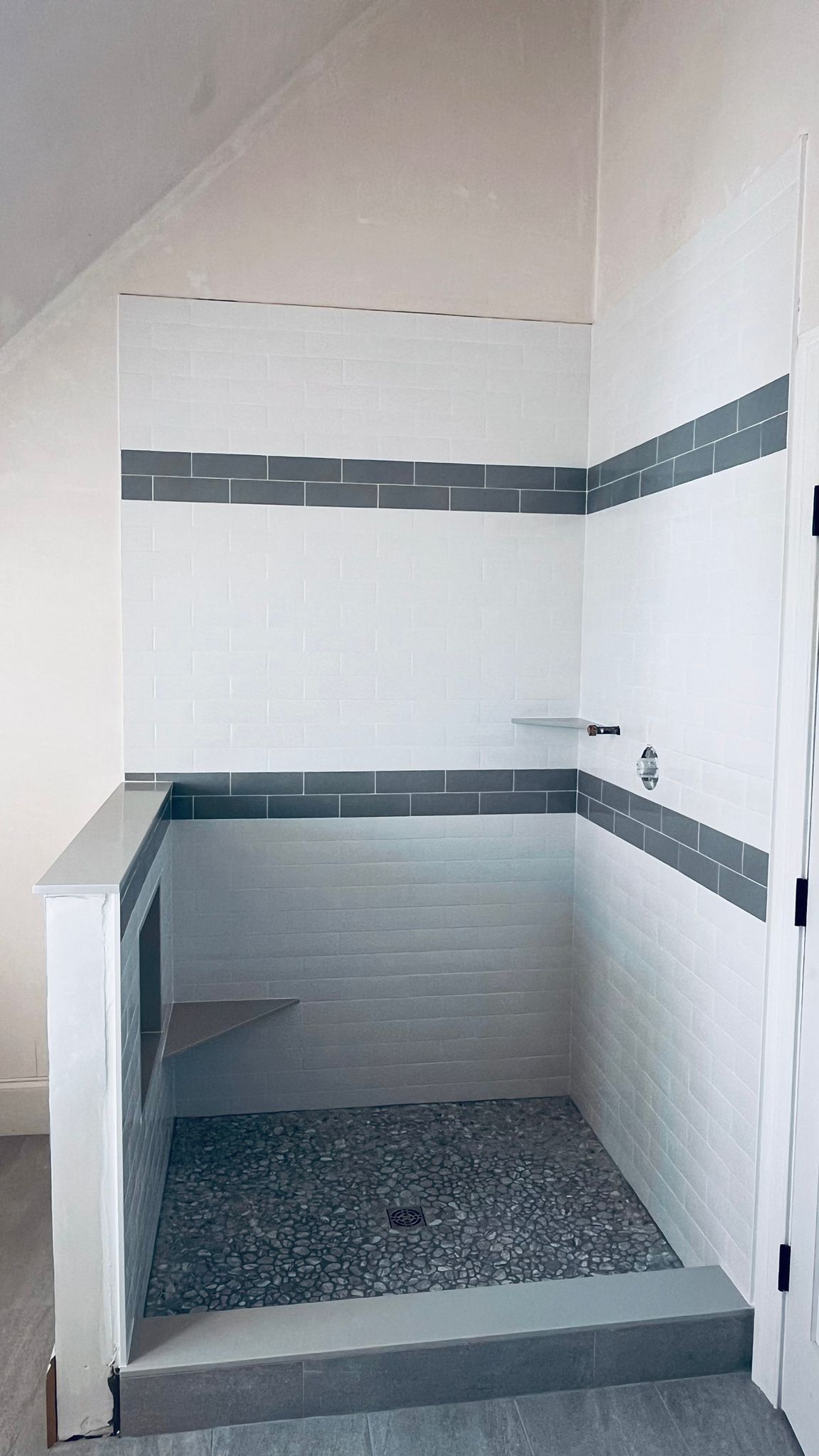
- Shower walls: waterproofed with RedGard liquid membrane.
- Shower floors: a Schluter Kerdi foam tray and Kerdi drain. We connect the drain ourselves. Only moving a drain or valve needs a plumber.
- Bathroom floors: Strata Mat uncoupling membrane, set with 254 Platinum thinset under the mat and 253 Gold over it. Or one heating cable if you want a warm floor.
- Grout: Laticrete Permacolor. Need help with color? Read how to choose grout color.
A two-person crew sets roughly 100 sq ft of tile a day. Most bathrooms take 2 to 5 working days.
Our Recommendation
- Tight budget: ceramic on the walls, porcelain on the floor.
- Most durable: porcelain everywhere, matte on the floor.
- Easiest care: large-format porcelain with matching grout.
- Best color range: glazed ceramic on a backsplash or accent wall.
For most bathrooms, porcelain vs ceramic tile is not either-or. Use both, each where it works best.
Get a Quote From Photos
We are a registered Massachusetts home improvement contractor (HIC #655072), fully insured with $1M liability, and installing tile since 2016. Most jobs are quoted from photos first. A deposit holds your start date, and the balance is due when the job is done. Picked your porcelain or ceramic tile? Send us photos of the room for a same-day install estimate.