Tub Surround Tile Ideas: 8 Patterns, Looks and Niche Tips
Tub surround tile ideas are the tile, pattern, niche and trim choices for the three walls around a bathtub. The best tub surrounds use one durable wall tile in a simple pattern, add one detail like a recessed niche or accent band, and finish the edges with clean metal trim. Because the tub wall is the biggest tiled area in most bathrooms, it sets the look of the whole room.
Here are 8 tub surround tile ideas we install across Greater Boston, plus our real prices and how we build them. For more of the bathroom, see Back to bathroom tile ideas or our tile ideas Complete Guide.
1. Tub Surround Tile Ideas, Patterns and Looks
A tub surround looks best when the tile is calm and the details are sharp. Pick the pattern first, then the color.
Tub surround tile patterns
- Running bond subway. The classic 3x6 brick pattern. It suits every house from a triple-decker to a new condo.
- Vertical stack. Long tiles set straight up make the ceiling feel higher.
- Horizontal stack. Long tiles in a straight grid stretch a short tub wall and feel modern.
- Herringbone accent. Use it on the back wall only, or inside the niche, so it does not get busy.
- Large-format porcelain. A 24x48 tile leaves only a few grout lines to scrub.
Tub surround tile looks
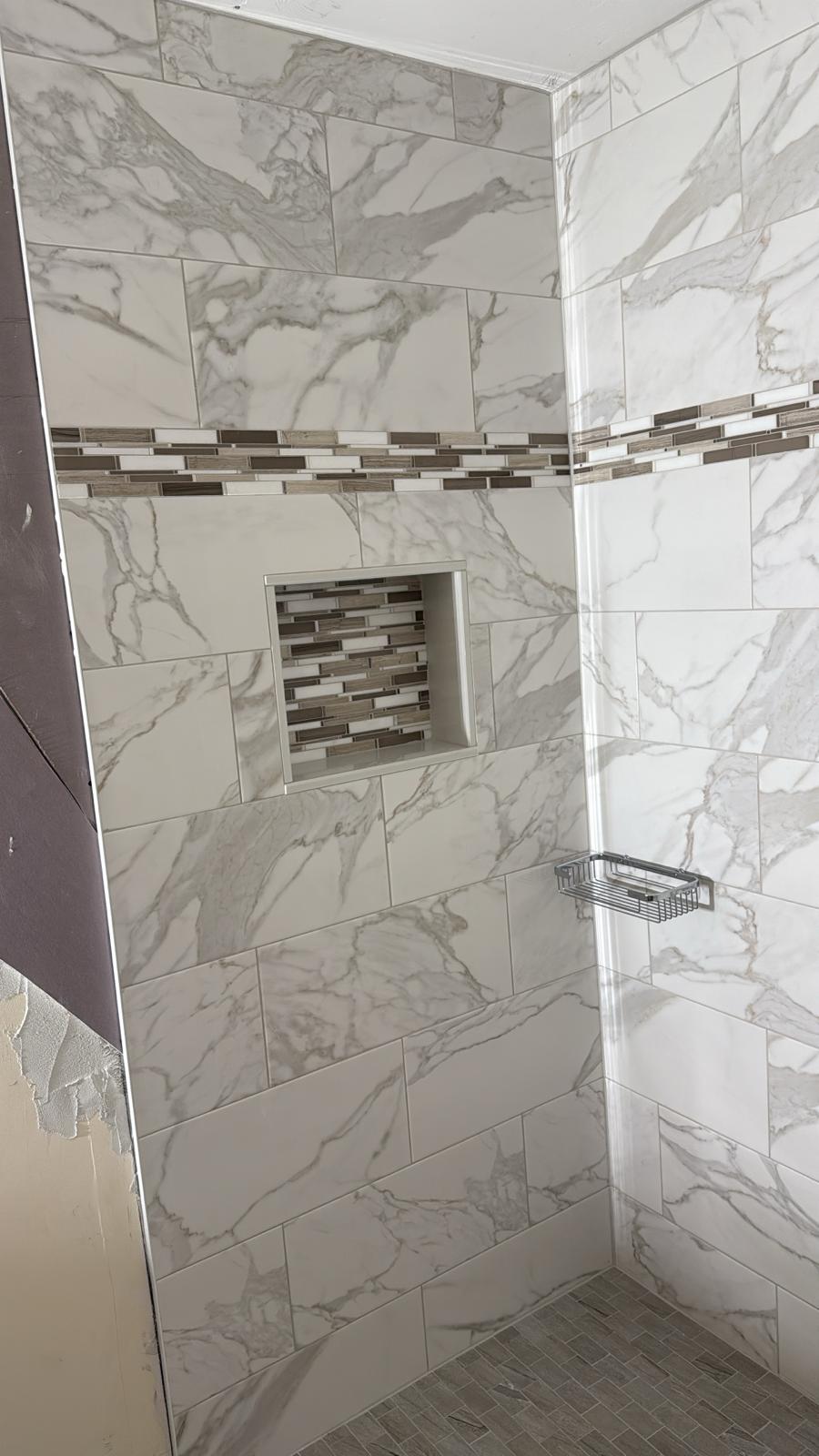
- Marble or marble-look. Carrara or Calacatta veining feels like a hotel. Marble-look porcelain skips the sealing.
- Handmade or zellige. Uneven glaze adds depth. It costs more, about $18 per sq ft for the tile (based on current material prices).
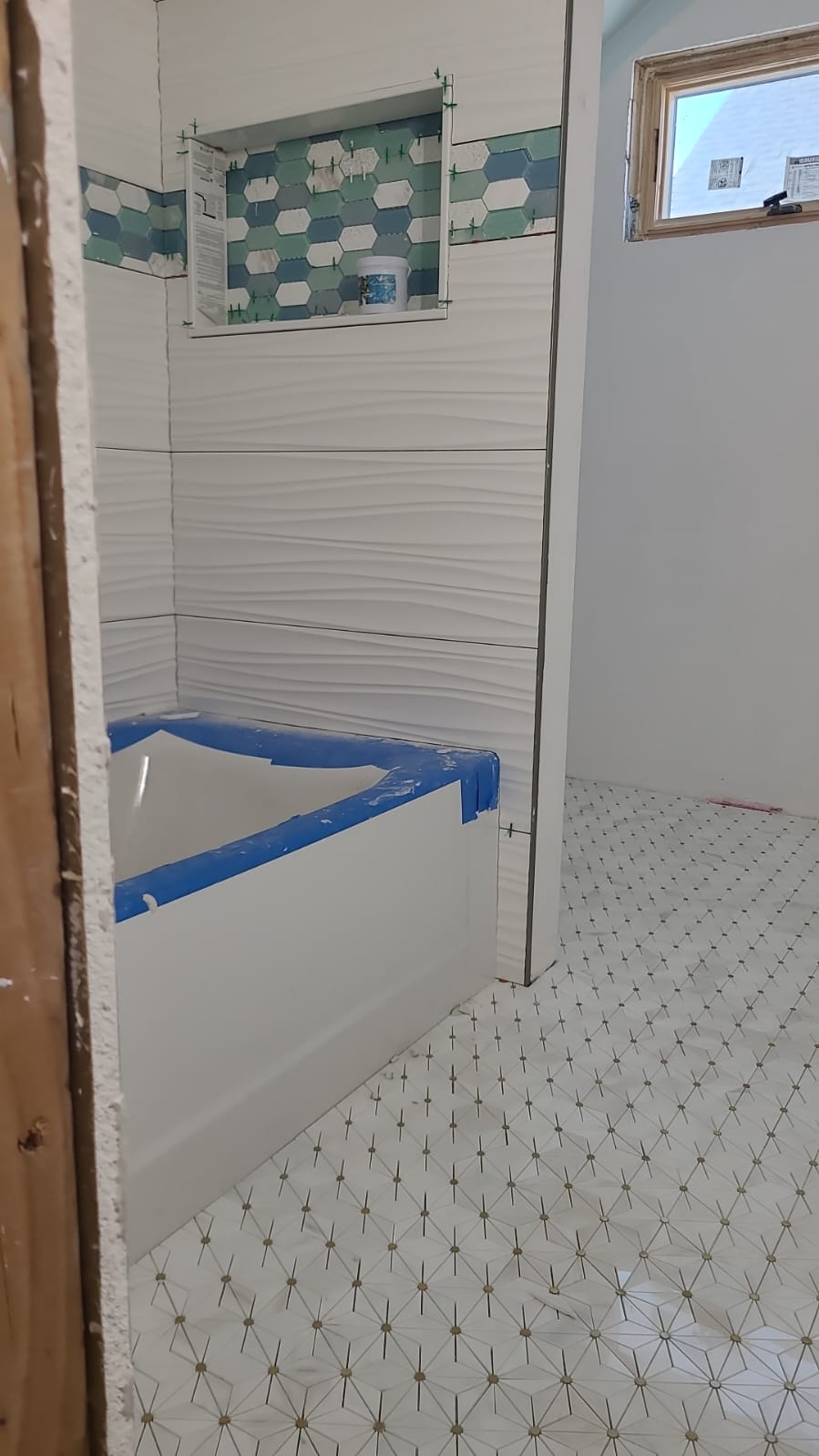
- Textured or 3D. Wave and fluted tiles cast soft shadows when light hits them from the side.
Niche and trim ideas
- Recessed niche. Holds bottles inside the wall instead of on the tub edge. Line it in the wall tile or a mosaic.
- Stone sill. A solid stone shelf at the bottom of the niche sheds water better than tile.
- Metal edge trim. Clean, thin edges where the tile stops. We finish it to match the grout.
- Tiled outside wall. Running the tile past the tub onto the outside wall ties the room together.
- Tile to the ceiling. Full-height tile protects the wall from steam and looks finished.
Picked a tub surround tile and pattern? Send us photos of your tub area for a same-day estimate. We will tell you where a niche fits and how your pattern will lay out.
Where should a niche go in a tub surround?
Most niches go on the back wall or the wall opposite the shower head, so water does not pour into them. We set the niche between studs and line up its edges with the tile joints. That way the niche looks planned, not cut in. A good height is easy to reach from standing and from sitting in the tub.
- Size: A single niche between two studs holds most bottles.
- Grout lines: Line the top and bottom of the niche up with full tile rows.
- Inside finish: Use the wall tile for a quiet look, or a mosaic for an accent.
- Sill: A stone sill sloped slightly forward sheds water.
Grout color for a tub surround
White grout with white subway looks clean and bright. Gray grout hides soap film and mildew spots better. Dark grout on white tile shows off the pattern, so the layout must be straight. We use Laticrete Permacolor grout and finish the metal edge trim in a matching color.
Ceramic vs porcelain for a tub surround
- Ceramic: Lighter and easier to cut. Fine for walls. Often about $4 per sq ft.
- Porcelain: Denser and more water resistant. Absorbs 0.5% water or less under ANSI A137.1. Often about $7 to $8 per sq ft.
- Both work on a tub wall when the waterproofing behind them is right.
Still weighing panels against tile? Our guide to tub surround vs tile compares acrylic and a tiled tub wall. Want contrast? See black and white bathroom tile.
2. What It Costs to Install
A tub surround tear-out and retile of about 60 to 80 sq ft runs $4,300 to $5,000 on our recent jobs (as of 2026 pricing). That covers labor and setting materials. The tile is not included.
- Recessed niche: adds about $400, which covers the install and a stone sill.
- Tile rip-out disposal: $450 when we remove old tile.
- Plumber: only needed if a valve has to move. That is billed by the plumber.
- Glass: a glass door or panel is extra.
Is a tiled tub surround worth it?
For most homeowners, yes. Tile lets you pick any color, size and pattern, and you can add a niche. A cracked tile can be replaced without tearing out the whole wall. Done right, with real waterproofing behind it, a tiled tub wall lasts for decades. Acrylic panels cost less up front, but they limit the look and cannot take a recessed niche the same way.
Patterns like herringbone take more cuts and time than running bond. We price from photos and your real layout, not a per-sq-ft formula.
3. How We Install It
A tub surround is a wet wall, so the waterproofing matters more than the tile.
- Demo. We tear out the old tile and wallboard down to the studs and haul it away.
- New board. We hang new backer board and tape the seams.
- Waterproof. We coat the walls with RedGard liquid waterproofing membrane.
- Frame the niche. If you want one, we build it into the wall and waterproof it too.
- Set the tile. We lay out the pattern so cuts land evenly at the corners and the niche.
- Grout and trim. We grout with Laticrete Permacolor and finish the metal edge trim to match. We caulk where the tile meets the tub.
Our two-person crew sets roughly 100 sq ft of tile a day on a simple layout. Most bathroom jobs take 2 to 5 working days.
Have the tile on site before demo day. We open every box and check for chips and color shifts before the old wall comes down. Buy about 10% extra for a straight layout, and keep one leftover box for future repairs.
4. Get a Quote From Photos
We quote most tub surrounds from photos first. A site visit follows only when measurements are uncertain.
- Take photos of all three tub walls and the valve.
- Tell us the tile and pattern you like, and if you want a niche.
- We send a per-area estimate, so you can add the floor now or later.
- You buy the tile. We recommend suppliers and check quantities.
- A deposit holds your start date. The balance is due when the job is done.
Aguirre Modern Tile has tiled Greater Boston tub surrounds since 2016. We are a registered Massachusetts home improvement contractor (HIC #655072) and fully insured. Ready to build one of these tub surround tile ideas? Send photos of your tub surround for a same-day estimate.
Frequently Asked Questions
What is the most popular tub surround tile?▾
Should a tub surround tile go to the ceiling?▾
How much does it cost to retile a tub surround?▾
What goes behind tub surround tile?▾
Is a niche worth it in a tub surround?▾
Need Bathroom Tile Installation?
Send us photos and get a same-day estimate.