Shower Leaking? The 4 Causes and How Pros Find and Fix Them
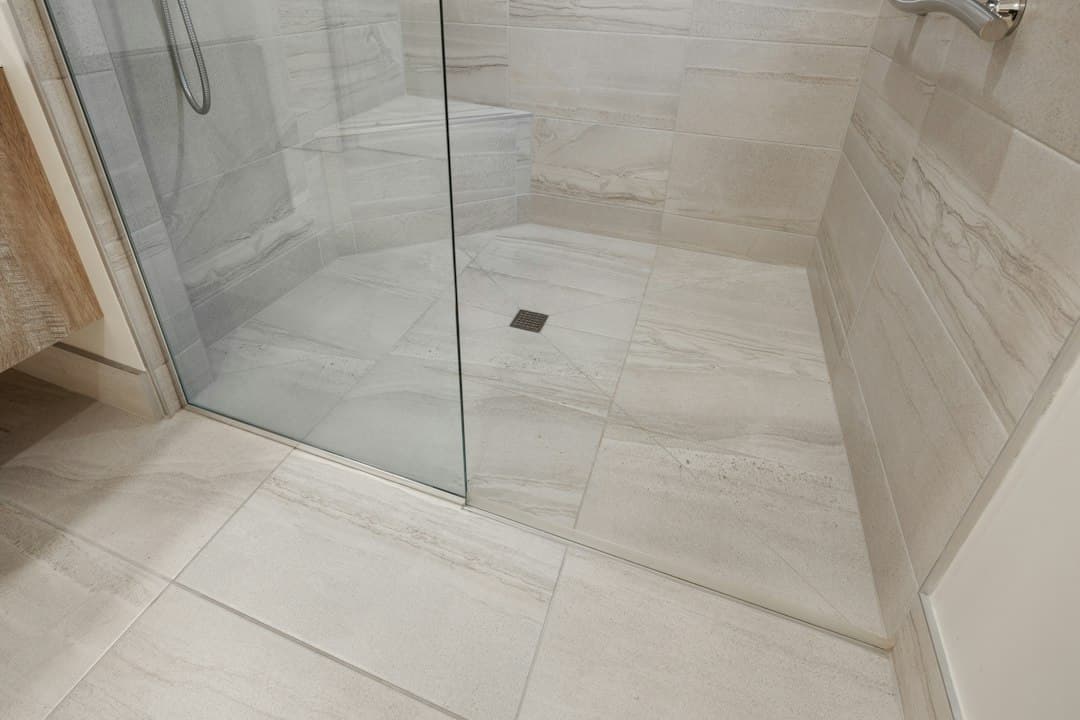
A shower leaking is water escaping the shower's waterproof envelope and soaking the floor, wall or ceiling around it. It gets out through failed grout or caulk, a failed pan, failed wall waterproofing, or a plumbing leak. Those four causes cover almost every leak we see. The first three are tile and waterproofing problems a tile installer fixes. The fourth is a plumber's job. Surface fixes like a regrout and recaulk run about $700 to $1,800, while a failed pan or wall usually means rebuilding that section. This page is part of our shower leaking Complete Guide.
Key Takeaways
- Four causes: grout and caulk, the shower pan, wall waterproofing, and plumbing.
- Where the water shows tells you a lot. Ceiling stains point to the pan or drain. Soft walls point to wall waterproofing or the valve.
- Test before you pay. A flood test, a dye test and a moisture meter find the source before anyone quotes.
- Costs vary widely. A regrout and recaulk runs $700 to $1,800 and a new Kerdi tray floor with a new curb runs $4,100 to $4,500 (as of 2026 pricing). A full rebuild is priced like a new shower at $5,000 to $7,000+.
- Plumber vs tile: moving a valve, drain or supply line is the plumber's. Everything the water touches on the tile side is ours.
Why Is My Shower Leaking? The 4 Usual Causes
Your shower is leaking because water found a gap in one of four places: grout and caulk, the pan, the wall waterproofing, or the pipes. Tile itself almost never leaks. Porcelain absorbs less than 0.5% water per ASTM standards. The weak points are the joints and the layers behind the tile.
1. Failed grout or caulk
Cement grout is not waterproof. In a well-built shower it does not need to be, because a membrane sits behind it. In an older shower with no membrane, cracked grout and split caulk let water soak straight into the wall board. Corners and the floor-to-wall seam fail first. Those joints should be silicone, not grout, because walls and floors move.
2. Failed shower pan
The shower pan is the waterproof base under the floor tile. It should slope 1/4 inch per foot to the drain. Old pans used a vinyl or lead liner under a mortar bed. Those liners crack, get punctured by nails, or leak where they clamp to the drain. When the pan fails, water goes into the subfloor and shows up on the ceiling below.
3. Failed wall waterproofing
Many older showers were built on greenboard drywall or bare cement board with no membrane. Cement board is not waterproof. Water that gets through the grout soaks it, and the studs and drywall next to it stay wet. On our rebuilds, we roll RedGard liquid membrane over the cement board, so water stops at the surface behind the tile.
4. Plumbing
A leaking valve body, a loose shower arm or a dripping supply line inside the wall can look exactly like a tile leak. The tell is timing. A supply line leaks whether or not anyone showers. A valve or shower arm leak shows up only when the water is on. Either way, the pipe repair is the plumber's job. We handle the tile and waterproofing around it.
Already seeing a stain or a soft wall? Send us photos of your leaking shower and the stain below it for a same-day estimate. Photos of the ceiling, the shower floor and the corners tell us most of what we need.
Is Your Shower Leaking Through the Ceiling Below?
A stain on the ceiling under the bathroom usually means water is getting past the shower floor. The most common sources are the pan, the drain connection, and open joints where the floor meets the wall. Less often, it is the toilet or a supply line in the same floor.
Notice when the stain grows. If it darkens right after a shower, the leak is on the shower side. If it stays wet all the time, think plumbing. Stop using the shower until it is tested. Every shower adds water to the subfloor and ceiling. For the full checklist, read our guide on shower leaking through ceiling.
Is Your Shower Leaking Behind the Wall?
Water behind the wall shows up as loose or hollow tiles, soft or bubbled drywall in the next room, peeling paint, or a musty smell. It usually comes from wall waterproofing that is missing or failed, or from a leak around the valve.
A leak that appears only when the shower runs, and only on the valve wall, points toward the valve or the openings around the trim. A leak spread along the whole wall points toward failed waterproofing. Older Boston homes often have non-standard framing and no real membrane, so we see the second case often. Read our guide on shower leaking behind wall for the signs and repair options.
What Causes a Shower Pan Leak?
A shower pan leaks when its waterproof layer fails or when the drain connection under the tile lets water by. Cracked mortar beds, punctured liners and clogged weep holes are the usual causes in older pans.
- Cracked mortar bed: the floor flexes and the liner under it tears.
- Clogged weep holes: in traditional pans, water that gets under the tile drains through small holes in the drain. When they clog, water sits in the mortar and finds a way out.
- Bad drain clamp: the liner pulls away from the drain body and leaks around it.
- Flat spots: a pan without proper slope holds water, which works into the grout.
A failed pan cannot be fixed from the top. The floor tile and pan come out, and we build a new one. Our standard is a Schluter Kerdi foam tray with a bonded Kerdi drain, or a sloped mud pan. We connect the Kerdi drain ourselves. Only moving the drain is the plumber's. Kerdi-Band ties the tray to the wall waterproofing at the seam. For details, see shower pan leak repair.
Mortar bed pan vs Schluter Kerdi tray
- Mortar bed (mud pan): hand-floated and sloped on site. Fits any shape or drain location. Takes longer to build and cure.
- Schluter Kerdi tray: pre-sloped foam tray with a bonded drain and membrane. Faster to install and consistent slope. Sized to standard footprints, cut to fit others.
What About Leaks at the Bottom of the Shower or Door?
Water on the bathroom floor outside the shower usually comes from the curb, the door or the threshold caulk, not from the pan. These are often the easiest leaks to fix.
- Door sweep or seal: a worn sweep on a glass door lets water run out onto the floor.
- Curb caulk: where the glass sits on the curb, the silicone line can split.
- Curb top sloping out: a curb should pitch slightly into the shower. One that pitches out sends water onto the bathroom floor.
- Cracked curb tile or grout: water gets into the curb and can wick under the bathroom floor.
If the curb itself is cracked or hollow, it often failed along with the pan. In that case, we rebuild the curb when we rebuild the pan. If you are also dealing with stained or crumbling joints, our regrouting shower guide covers when a regrout is enough.
How Do Pros Find a Shower Leak Before Quoting?
We isolate the leak by testing one part of the shower at a time. That way, the quote fixes the cause instead of guessing. Testing usually takes part of a visit and saves you from paying for the wrong repair.
- Look and tap. We check for cracked grout, split caulk, hollow tiles and soft spots. A tap with a tool handle finds hollow tile fast.
- Moisture meter. We read the walls next to the shower and the ceiling below. Wet readings show where the water travels.
- Flood test. We plug the drain and fill the pan with water. If the ceiling below gets wet or the level drops, the pan or drain has failed.
- Wall spray test. We run water on one wall at a time with the drain open. If the leak appears only during one wall's test, that wall is the source.
- Dye test. Colored dye in the water helps show which joint or opening is feeding a stain.
- Valve check. We pull the trim plate and look at the opening around the valve. If the valve itself is weeping, we call in the plumber.
Is it a plumber's problem or a tile problem?
- Leaks with no shower running: supply line. Call a plumber.
- Leaks only during the pan flood test: pan or drain. Tile installer.
- Leaks only during a wall spray test: wall grout, caulk or waterproofing. Tile installer.
- Leaks only with the valve on and shower head running: could be the valve, the shower arm or the trim openings. Start with a plumber's check, then tile.
Can You Fix a Shower Leak Without Removing the Tile?
Sometimes. If the leak comes from cracked grout or split caulk and the tile is still tight, a regrout and recaulk fixes it with the tile left in place. If the pan or the wall waterproofing has failed, no surface product will stop it. That section has to come out.
Here is the test we use. Tap the tiles in the wet area. Read the wall and floor with a moisture meter. If the tiles are solid and the readings dry out after a few days without use, the water is getting in at the surface. A surface fix will work. If tiles sound hollow or the readings stay high, water is trapped behind the tile, and new grout will just seal it in.
Surface fix vs section rebuild
- Surface fix: cut out grout, regrout with Laticrete Permacolor, silicone every corner and change of plane, seal. Tile stays. Usually 1 to 2 days.
- Section rebuild: remove tile and board or pan, dry and inspect the framing, install new cement board with RedGard or a new Kerdi tray, retile. Usually 1 to 3 days for one section, 4 to 8 days for the whole shower.
Be careful with sprays and sealers sold as leak stoppers. A clear coating over the grout can slow water for a while, but it does not fix a torn liner or a soaked wall. It can also hide the problem until the damage below is worse. Penetrating grout sealer is still worth using on sound grout. It protects against stains for 1 to 3 years before it needs reapplying.
How Much Does Shower Leak Repair Cost?
Shower leak repair costs depend on which layer failed. Regrouting and recaulking are the cheapest fixes. A pan or wall rebuild costs more because it means demo, new waterproofing and new tile. Based on current Greater Boston rates, here is how it breaks down.
Repair | Typical range (as of 2026 pricing) | Typical time |
|---|---|---|
Recaulk corners and tub line with 100% silicone | Often a minimum charge | Same day |
Full regrout with Laticrete Permacolor | $700 to $1,800 with recaulk | 1 to 2 days |
Single cracked tile replacement | $700 to $900 (matching tile needed) | Same day |
Partial section rebuild (one wall or the pan) | $4,100 to $4,500 for a new Kerdi tray floor and curb | 1 to 3 days or more |
Full rebuild with Schluter Kerdi tray and RedGard walls | $5,000 to $7,000+ | 4 to 8 days |
A full rebuild is priced like a new install. Typical showers have 40 to 120 square feet of tile. You buy the tile and we recommend where to shop. We supply the thin-set, membrane, tray, drain, grout and trim.
Two costs are separate from the tile work. A plumber bills for any valve or drain move. And the ceiling or drywall patch below the shower is a separate trade. Plan for both if your leak has already stained a ceiling or softened a wall.
What raises the cost
- Rotted framing or subfloor found after demo.
- Mold behind the tile that needs drying and treatment. The EPA's mold guidance covers cleanup basics.
- Old mortar-set walls that take longer to remove.
- Discontinued tile that forces a full wall or floor replacement instead of a patch.
Stop the Shower Leaking Before It Spreads
A shower leaking into a ceiling or wall gets more expensive every week it runs. Find the cause, fix that layer, and build it back with real waterproofing. Aguirre Modern Tile is licensed (MA HIC #655072), carries $1M in liability insurance, and has worked on Greater Boston showers since 2016.
Send photos of your leaking shower and get a same-day estimate that tells you whether it is grout, the pan, the wall or the plumbing.
Frequently Asked Questions
Why is my shower leaking?▾
How do you find where a shower is leaking?▾
Will regrouting stop a shower leak?▾
How much does it cost to fix a leaking shower?▾
Is a leaking shower valve a tile problem?▾
Need Tile Repair?
Send us photos and get a same-day estimate.