Regrouting Shower Tile: When It Works and When It Won't
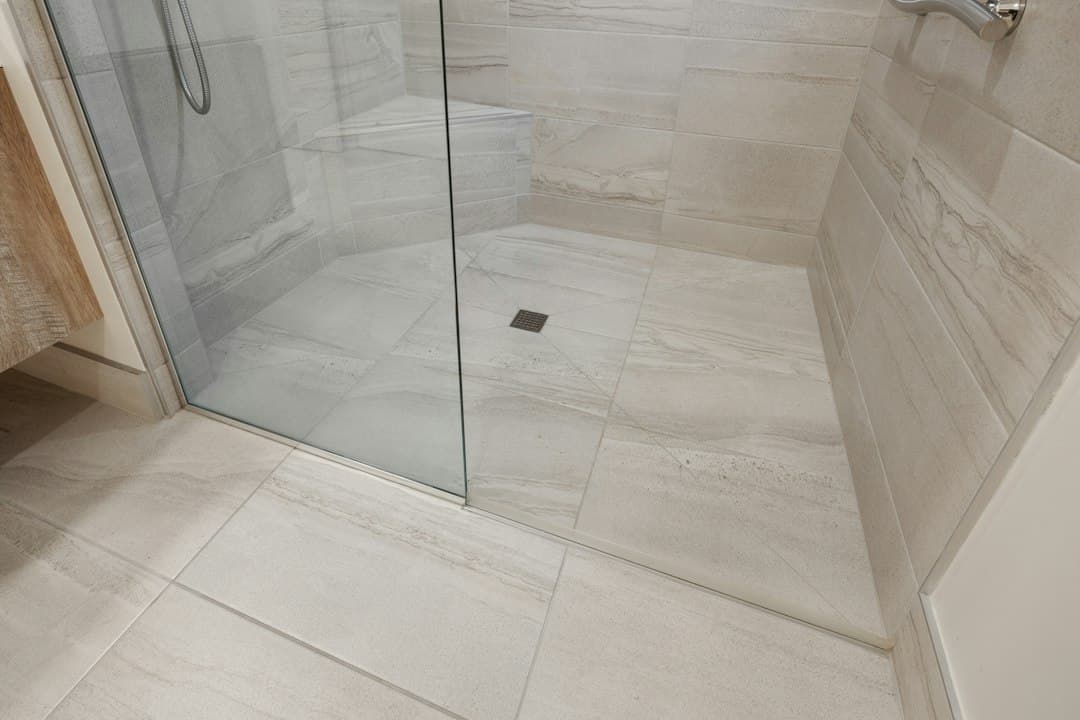
Regrouting a shower is the job of cutting out old, failing grout and packing fresh grout into the joints between tiles. Regrouting shower tile fixes cracked, stained or moldy joints when the tile is still tight and the wall behind it is dry. It will not fix loose tiles, soft walls or a leaking pan. A full regrout and recaulk runs $700 to $1,800 (as of 2026 pricing).
Key Takeaways
- Regrouting fixes joints, not walls. If tiles are hollow or loose, water is already behind them and a regrout only hides it.
- Cost: a full regrout and recaulk runs $700 to $1,800 based on current Greater Boston rates. Most showers take 1-3 days.
- Depth matters: old grout must come out to at least 2/3 of the tile thickness. A thin skim over old grout cracks and lets go.
- Corners get caulk, not grout. Inside corners and the floor-to-wall joint need 100% silicone that matches the grout.
- Seal cement grout. A penetrating sealer protects it for 1-3 years. Epoxy grout never needs sealing.
This deep-dive is part of our regrouting shower Complete Guide. Here we go further on one question: is regrouting shower joints the right repair, or a patch over a bigger problem? Aguirre Modern Tile has regrouted and rebuilt showers across Greater Boston, MA since 2016. The answer depends on what is behind the grout, so that is where we start.
Not sure if your tile shower needs a regrout or something bigger? Get a free estimate for your shower regrout: send us photos of your grout and corners for a same-day quote. Close-ups of the worst joints and one wide shot of each wall are enough for a first answer.
When Does Regrouting a Shower Fix the Problem?
Regrouting fixes the problem when the damage stops at the grout. The tile must be well bonded and the wall behind it must be solid and dry. If either one fails, new grout lasts a few months and then cracks along the same lines.
We tap every wall with the handle of a screwdriver before we quote a regrout. A solid tile gives a sharp click. A hollow tile gives a dull thud, and that tells us the bond or the wall has failed.
Regrouting works when:
- Grout is cracked, crumbling or missing in spots, but every tile is tight.
- Grout is stained or moldy and cleaning no longer helps.
- You want a new grout color on tile you still like.
- Corner caulk failed and the grout next to it is starting to wash out.
Regrouting will not fix:
- Tiles that sound hollow or move when you press on them.
- A wall that flexes or feels soft near the valve or the bottom rows.
- A stain on the ceiling below the bathroom. Read our guide on a shower leaking through ceiling first.
- A failed pan under the floor tile. That needs shower pan leak repair, not new grout.
- Cracks that run across several tiles in a line. That points to movement, which our cracked tile repair guide covers.
What Is Shower Regrouting and Sealing?
Shower regrouting and sealing is the full service: remove the old grout, regrout, apply a penetrating sealer once the grout cures, and recaulk the corners. Skipping the sealer on cement grout lets water and soap soak in again. Skipping the caulk leaves the weakest joints in the shower open.
What Are the Signs You Need to Regrout Your Shower?
The clearest sign is grout you can scratch out with a house key. Healthy cement grout is hard. Failing grout turns sandy, cracks along the joint, or falls out in chunks.
- Hairline cracks along joints, most often in the bottom two rows and on the floor.
- Crumbling grout that turns to sand when you scrape it.
- Gaps or missing grout where you can see the thinset or backer board behind the tile.
- Black spots that come back within days of cleaning. Mold is living deep in the joint.
- Dark lines that stay damp long after a shower. The grout is soaking up water.
- Caulk that is split, peeling or black in the corners and along the tub.
The shower floor almost always fails first. Water sits there longest, and people stand on it every day. A pink or orange film is a different issue and usually cleans off. Our guide on why is my grout turning black explains each color.
Why Does Shower Grout Crack?
Shower grout cracks because something moves, gets wet too often, or was mixed wrong. Grout is rigid. It cannot stretch, so any movement in the walls or floor shows up as a crack in the joint.
- Movement: framing shrinks and floors flex. Winter temperature swings in Boston stress every joint in the room.
- Grout in the corners: inside corners need a flexible joint. Grout there cracks every time.
- Wrong grout type: unsanded grout in joints 1/8 inch or wider shrinks and cracks. Sanded grout belongs in those joints.
- Too much water: grout mixed too wet, or washed too hard during cleanup, cures weak and powdery.
- No sealer: unsealed cement grout soaks up water and soap, then breaks down faster.
- Water behind the tile: a soft wall moves, and the grout cracks first. This is the case where regrouting fails.
High summer humidity also speeds up mold growth in grout that is already cracked. A bathroom fan that actually vents outside is part of the fix.
How Do Pros Regrout a Shower?
Pros regrout a shower in four stages: remove, regrout, seal and recaulk. Most of the labor is in removal. That step decides whether the new grout lasts.
- Inspect. We tap-test every wall and the floor. We look for loose tile, soft spots and stains near the valve.
- Remove the old grout. We use an oscillating tool from Fein with a carbide blade, plus a hand grout saw near edges. We cut to at least 2/3 of the tile thickness. We also pull all old caulk.
- Clean the joints. We vacuum the dust out and wipe the joints. New grout will not bond to dust.
- Regrout. We pack grout into the joints with a rubber float, working on the diagonal. We use Laticrete Permacolor, matched to your color choice.
- Clean the haze. We sponge with clean water, then buff the film off the tile face.
- Seal. Once the grout cures, we apply a penetrating sealer to cement grout. We follow the manufacturer specification for cure time.
- Recaulk. We run 100% silicone at inside corners, the floor-to-wall joint and the tub line.
A standard shower takes 1-3 days depending on size and how hard the old grout is. You stay out of the shower until the grout and caulk cure. We give you the exact wait for the products we used.
Epoxy vs Cement Grout for a Shower Regrout
Cement grout is the standard choice for walls. Epoxy grout costs more but is stain-proof and never needs sealing. We recommend epoxy on busy family shower floors.
Product | Grout type | Typical material cost | Sealing | Best for |
|---|---|---|---|---|
Laticrete Permacolor | Cement grout | About $2 per sq ft | Penetrating sealer, reapply every 1-3 years | Shower walls, most regrouts |
Mapei Keracolor (sanded) | Cement grout | About $2 per sq ft | Penetrating sealer | Joints 1/8 inch and wider |
Laticrete SpectraLOCK | Epoxy grout | About $5 per sq ft | Never needs sealing | Shower floors, high-use baths |
Mapei Kerapoxy | Epoxy grout | About $5 per sq ft | Never needs sealing | Shower floors, wet zones |
Miracle Sealants 511 Impregnator | Penetrating sealer | About $1.50 per sq ft | Is the sealer | Protecting cement grout |
Material costs are based on current material prices. Epoxy is harder to install, so labor runs higher too.
Should Shower Corners Be Caulked or Grouted?
Shower corners should be caulked, not grouted. Corners are where two surfaces meet and move separately. Grout there cracks within a season, and water gets in behind it.
According to the Tile Council of North America (TCNA) Handbook, tile work needs movement joints at changes of plane. In a shower, that means these spots get a flexible sealant:
- Inside corners where two walls meet.
- The joint where the walls meet the shower floor.
- The joint along the top of a tub.
- Where tile meets a window, a ceiling or a different material.
We use 100% silicone colored to match the grout, such as Laticrete's matching silicone line. Acrylic caulk shrinks and molds faster in a wet shower. Caulk is a maintenance joint. Plan to check it every year and replace it when it splits or stains.
How Much Does Shower Regrouting Cost?
Shower regrouting costs $700 to $1,800, recaulk included, at current rates in Greater Boston. Price depends on size, tile size, grout type and how hard the old grout is to remove. Our full shower regrout cost breakdown has worked examples.
Take a common 3x5 stall with tile to 7 feet. The walls have about 77 sq ft of tile and the floor adds 15 sq ft. Regrouting the whole stall lands in the middle of the $700 to $1,800 range.
- Small tile, more joints: a 2-inch mosaic floor has far more grout per foot than 12x24 wall tile.
- Epoxy grout: about $5 per sq ft in material versus about $2 for cement grout.
- Sealing: about $1.50 per sq ft in sealer for cement grout.
- Recaulking: usually part of a full regrout. Ask if it is in the price.
Why Is My Shower Grout Black, Pink or Orange?
Black grout is usually mold or mildew. Pink or orange is usually a bacteria film that grows on soap residue. Black that comes back within days often means the mold is deep in porous grout.
Pink and orange films sit on the surface. A good scrub and better ventilation usually solve them. Orange can also come from iron in the water. The EPA's mold guidance covers safe cleaning of hard surfaces. If the black spots return after a deep clean, the joints need to come out. See our guide to grout turning black or pink for each cause.
Is It Worth Hiring a Pro to Regrout a Shower?
Yes, for most homeowners. The risk is in the removal. A slipped oscillating blade chips glazed tile, and those tiles are often discontinued. Cutting too deep can nick the waterproofing behind the tile.
A pro also catches the problems a regrout cannot fix. If we find a soft wall, we stop and show you before any grout goes in. A rebuilt wall gets RedGard liquid waterproofing. A rebuilt floor gets a Schluter Kerdi foam tray or a mud pan, and we connect the Kerdi drain ourselves. If your shower is already leaking, start with our shower leaking guide.
Aguirre Modern Tile is licensed under MA HIC #655072 and carries $1M in liability insurance. In our experience, an honest look at the wall saves more money than any grout choice.
Get Your Regrouting Shower Estimate
Regrouting shower tile is a fast, smart repair when the tile is tight and the wall is dry. When it is not, you need to know before you spend the money. Send us photos of your shower for a same-day regrout estimate, and we will tell you whether new grout will fix it or what will.
Frequently Asked Questions
How long does regrouting a shower take?▾
Can you regrout over old grout?▾
How much does it cost to regrout a shower?▾
Should I use epoxy grout when I regrout my shower?▾
How often should shower grout be sealed?▾
Will regrouting stop my shower from leaking?▾
Do shower corners get grout or caulk?▾
Need Tile Repair?
Send us photos and get a same-day estimate.