Shower Tile Repair: What Can Be Fixed and What Needs a Rebuild
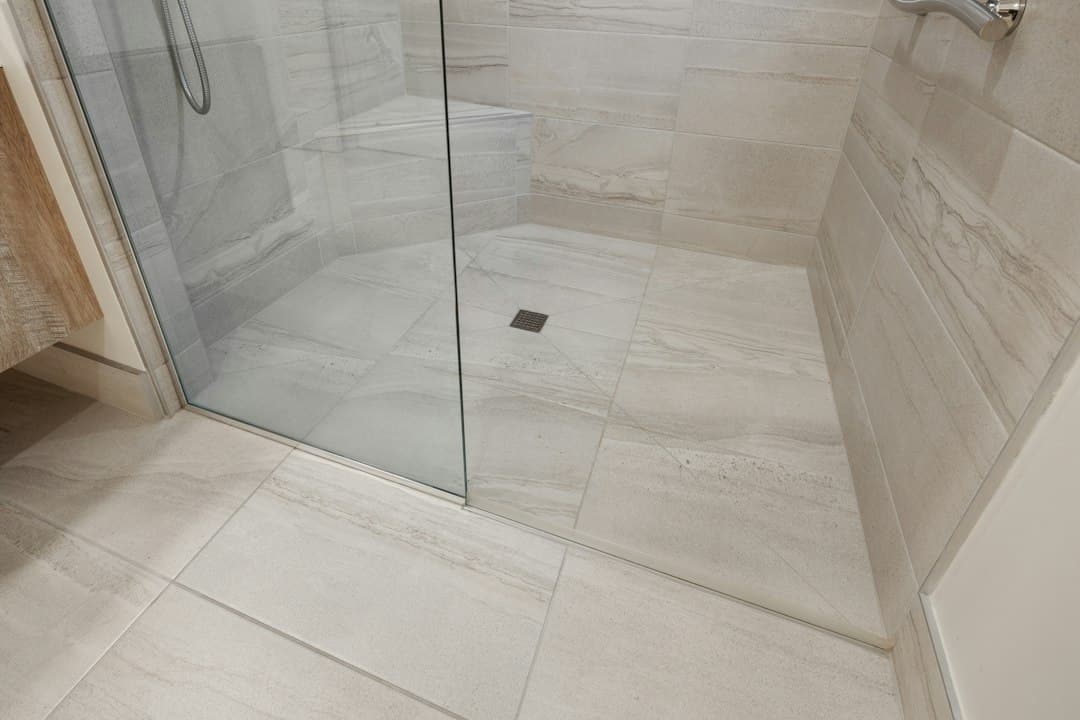
Shower tile repair is the work of fixing a shower's grout, caulk, tile, pan or waterproofing so it stops leaking, without tearing out more than needed. Most shower problems are repairs, not rebuilds. Failed grout, cracked caulk and a few loose tiles can be fixed in 1 to 3 days. A leaking pan or rotted wall behind the tile usually means taking that part of the shower down to the studs or subfloor and building it back right. Based on current Greater Boston rates, a regrout and recaulk runs $700 to $1,800 and a full rebuild runs $5,000 to $7,000+. The cause of the problem decides which one you need.
Key Takeaways
- Find the cause first. Stains, loose tile and leaks are symptoms. The fix depends on whether grout, caulk, the pan or the wall waterproofing failed.
- Grout and caulk are repairs. A full regrout and recaulk runs $700 to $1,800 (as of 2026 pricing) and keeps your tile in place.
- A leaking pan or soft wall is a rebuild. You cannot fix waterproofing from the face of the tile. That section has to come out.
- Single cracked tiles are the smallest repair. Repairing a few cracked tiles runs $700 to $900 when matching tile exists.
- Tile, grout, pan and waterproofing are the tile installer's job. Moving a valve, drain or supply line is the plumber's.
Shower Tile Repair: What Can Be Fixed and What Needs a Rebuild?
If the tile is tight and the wall behind it is solid, the shower can almost always be repaired. If tiles sound hollow, move when you press them, or the wall feels soft, the damage is behind the tile and that section needs a rebuild. That one test settles most repair-or-rebuild questions before anyone quotes a price.
Tile itself is rarely what fails. Porcelain absorbs less than 0.5% water per ASTM standards, so water does not pass through the tile. It passes through grout joints, open caulk lines and gaps around the valve and spout. In an older shower with no real waterproofing, that water soaks the wall board. In a newer shower with a membrane, the same water drains to the pan and nothing gets hurt.
Signs a repair will do the job
- Grout is stained, crumbling or missing in spots, but the tiles are tight.
- Caulk at the corners or where the wall meets the tub has cracked or turned black.
- One or two tiles are cracked from an impact, with no hollow sound around them.
- No stains on the ceiling below and no soft drywall on the other side of the wall.
Signs you need a partial or full rebuild
- Several tiles sound hollow when tapped or flex under your hand.
- The floor of the shower moves, cracks repeatedly, or water sits in one spot.
- A water stain shows up on the ceiling below every time the shower runs.
- The drywall next to the shower is soft, bubbled or smells musty.
- You can see dark staining or mold coming through the grout from behind.
A rebuild does not always mean the whole shower. We often replace just the pan, or just one wall, as a partial section running corner to corner. That looks cleaner than patching random tiles and costs less than a full tear-out. Have photos of the damage? Send us photos of your shower tile repair and get a same-day estimate that tells you whether it is a regrout, a pan, or a wall.
What is a shower pan?
A shower pan is the sloped, waterproof base under the floor tile that carries water to the drain. It is built either as a mortar bed (mud pan) sloped 1/4 inch per foot toward the drain, or as a pre-sloped foam tray like the Schluter Kerdi shower tray. When the pan fails, water goes into the subfloor instead of down the drain.
Why Is My Shower Leaking?
Showers leak for four common reasons: failed grout or caulk, a failed pan, failed wall waterproofing, or plumbing. The first three are tile problems. The fourth belongs to a plumber. Where the water shows up tells you a lot about which one you have.
- Ceiling stain below the shower: usually the pan, the drain connection, or open joints at the floor-to-wall corner.
- Wet or soft wall next to the shower: usually wall waterproofing or a leak around the valve.
- Water on the bathroom floor outside the shower: usually the curb, the door sweep or caulk at the threshold.
- Stain that appears even when nobody showers: usually a supply line, which is plumbing, not tile.
Before we quote a leak, we test it. We run water on one area at a time, flood the pan with the drain plugged, and check the wall with a moisture meter. That tells us whether we are pricing a regrout or a rebuild. Read our complete guide to shower leaking repair.
Two common leak paths get their own deep dives. If you see a stain below the bathroom, see shower leaking through ceiling. If the wall next door is soft, see shower leaking behind wall. For a failed base, see shower pan leak repair.
When Does a Shower Need Regrouting or Recaulking?
A shower needs regrouting when grout is cracked, crumbling, missing or stained deep enough that cleaning does not help. It needs recaulking when the soft joints at corners, the tub line or the floor-to-wall seam have split or grown mold. Both are true repairs. Your tile stays on the wall.
Full regrouting means cutting out the old grout to at least two-thirds of the tile thickness, cleaning the joints, and packing in new grout. We use Laticrete Permacolor grout on our jobs. Permacolor is a cement grout with consistent color, which matters when you are matching an existing floor or wall. For heavy-use shower floors, epoxy grout like Laticrete SpectraLOCK is another option. It never needs sealing, but it costs more and takes more labor.
Corners and changes of plane should be silicone caulk, not grout. Walls and floors move a little with temperature and humidity. Grout in a corner cracks from that movement and lets water in. Boston's winter swings make this worse, so we check every corner joint on a repair visit.
Regrout vs grout color seal
- Full regrout: old grout comes out, new grout goes in. Fixes cracks and gaps. Runs $700 to $1,800 with recaulk (based on current Greater Boston rates).
- Grout color seal: a pigmented sealer brushed over sound grout. Changes the color and seals it. Lasts 3 to 7 years. Does not fix cracked or missing grout.
- Penetrating sealer: clear sealer over clean cement grout. Protects against stains for 1 to 3 years before it needs reapplying.
If grout keeps cracking in the same spot after a regrout, the tile underneath is moving. That points to a substrate or pan problem, not a grout problem. Read our complete guide to regrouting a shower. For pricing detail, see our shower regrout cost breakdown. If the grout is changing color rather than cracking, read why is my grout turning black.
Can You Replace One Cracked Shower Tile?
Yes. A single cracked tile can be cut out and replaced without touching the tiles around it, as long as the wall or floor behind it is sound. The hard part is usually finding a matching tile, not the labor.
We cut the grout around the tile with an oscillating tool, break the tile out from the center, and scrape the old thin-set off the backer. Then we set the new tile in fresh thin-set and grout it to match. Porcelain is harder to cut than ceramic and needs a diamond blade, but the process is the same. It runs $700 to $900 when matching tile exists.
Since you buy the tile, check your basement or garage for leftover boxes first. If the tile is discontinued, we can set a complementary accent tile so the repair looks planned. We will tell you which suppliers are worth calling to hunt down a match.
One cracked tile vs a failing floor
- One cracked tile, solid around it: impact damage. Replace the tile.
- Cracks that run across several tiles in a line: the substrate is moving or cracking underneath. A tile swap will crack again.
- Loose or hollow tiles in a group: the bond has failed, often from moisture. Lift them and find out why before resetting.
- Cracked tile on a shower floor that also leaks: treat it as a pan problem until proven otherwise.
Loose tile is often a warning, not the problem itself. Reattaching tiles without fixing the moisture or movement behind them just buys a few months. Read our complete guide to cracked tile repair.
Is a Shower Leak the Tile Installer's Job or the Plumber's?
Tile, grout, caulk, the shower pan and the waterproofing are the tile installer's job. Moving a valve, a drain or a supply line is the plumber's. That split saves you from paying two trades to look at the same problem.
Part of the shower | Who fixes it | What we use |
|---|---|---|
Grout and caulk | Tile installer | Laticrete Permacolor grout, 100% silicone at corners |
Wall waterproofing | Tile installer | Custom Building Products RedGard liquid membrane |
Shower floor pan | Tile installer | Schluter Kerdi foam tray or a sloped mortar bed |
Kerdi drain connection | Tile installer | Schluter Kerdi-Drain bonded to the membrane |
Tray or curb to wall seam | Tile installer | Schluter Kerdi-Band |
Moving the drain location | Plumber | Not a tile task |
Moving or replacing the valve | Plumber | Not a tile task |
Leaking supply line in the wall | Plumber | Not a tile task |
On a rebuild, we connect the Kerdi drain ourselves. The plumber only comes in if the drain has to move or the valve has to be replaced or relocated. If the wall is open anyway, that is the cheapest time to swap an old valve, so we flag it when we see one.
On walls, we waterproof with RedGard, a liquid membrane rolled on in coats over cement board. We do not wrap the whole wall in Kerdi sheet. Kerdi-Band goes only where a Kerdi tray or curb meets the wall, so the floor and wall systems tie together without a gap. You can read the product details at Custom Building Products and Schluter Systems.
What is RedGard?
RedGard is a liquid waterproofing membrane made by Custom Building Products. It goes on pink and dries red, so you can see when it is fully cured and how thick the coat is. It bridges small cracks and seals around valve and spout openings, which are the spots where old showers leak most.
How Much Does Shower Tile Repair Cost?
Shower tile repair in Greater Boston runs from $700 to $900 for a few cracked tiles to $5,000 to $7,000+ for a full rebuild (as of 2026 pricing), depending on whether it is a surface repair or a rebuild. Prices are per job, not per foot, and cover labor plus setting materials.
Repair type | Typical range | Typical time |
|---|---|---|
Single tile replacement | $700 to $900 | Same day, plus grout cure |
Full regrout with Laticrete Permacolor | $700 to $1,800 with recaulk | 1 to 2 days |
Grout color seal over sound grout | Lower than a regrout | 1 day |
Loose tile reset with fresh thin-set | $700 to $900 for a few tiles; more if the backing is wet | 1 to 3 days |
Recessed niche added during a rebuild | $400 install | Part of the rebuild |
Pan or full shower rebuild with Kerdi tray and RedGard | $4,100 to $4,500 for the floor and curb; $5,000 to $7,000+ for a full rebuild | 4 to 8 days |
A full rebuild is priced like a new shower install, since that is what it is. Typical showers run 40 to 120 square feet of tile, walls and floor combined. You buy the tile, and we recommend suppliers. We supply the setting materials: thin-set, membrane, tray, grout and trim.
What drives the price up
- Hidden damage: rotted studs, soft subfloor or mold behind the tile adds demo and drying time.
- Old mud walls: older Boston homes often have tile set in thick mortar, which takes longer to remove.
- Natural stone: marble needs sealing before grouting and careful cuts.
- Small mosaics: penny or hex tile has more grout joints to cut out and refill.
- Plumbing changes: a plumber's visit is billed separately.
Does Boston Weather Affect Shower Grout and Caulk?
Yes. Big swings in temperature and humidity make walls and floors expand and shrink a little, and that movement cracks rigid joints. Boston gets both cold winters and humid summers, so shower joints work harder here than in milder climates.
- Winter: temperature swings stress caulk joints. We recommend checking corners and the tub line every year before winter.
- Summer: high humidity speeds up mold growth in failing grout. A working bath fan matters more than any cleaner.
- Exterior walls: a shower on an outside wall sees more freeze-thaw stress, so its waterproofing has to be continuous.
- Older homes: many Boston houses have several layers of old tile or non-standard framing, which adds demo time on a repair.
Flexible silicone at every change of plane, plus sealed cement grout, handles that movement. That is why corners are the first thing we check on any shower tile repair visit.
How Long Does a Shower Tile Repair Take?
Most shower tile repairs take 1 to 3 days. A full rebuild takes 4 to 8 days, because each layer needs time to set before the next goes on. You will need to stay out of the shower until the grout and caulk cure.
- Day 1: we protect the bathroom, remove failed grout, caulk or tile, and check what is behind it.
- Day 2: we reset tiles and regrout, or start the rebuild with backer board, tray and RedGard.
- Days 3 to 8 (rebuilds): membrane cures, tile goes on, grout and silicone go in last.
How Do You Choose a Contractor for Shower Tile Repair?
Pick a contractor who tests the leak before quoting, tells you plainly whether it is a repair or a rebuild, and is licensed and insured in Massachusetts. A cheap quote that skips the cause usually leads to a second repair.
- Ask how they will find the leak. A good answer includes water testing and a moisture meter.
- Ask what waterproofing they use. You want a named system like RedGard or Schluter Kerdi, not "greenboard."
- Ask who handles the drain. On a Kerdi tray, the tile installer should connect it.
- Check the license. Aguirre Modern Tile holds MA HIC #655072 and carries $1M in liability insurance.
- Ask about the ceiling or drywall. Patching drywall below or next to the shower is usually separate from the tile repair. Know who is doing it.
Industry guidance on setting materials and installation methods comes from the Tile Council of North America (TCNA). A contractor who follows those methods, and the membrane maker's instructions, builds a shower that does not leak.
Get a Clear Answer on Your Shower Tile Repair
Most shower tile repair comes down to one question: is the problem on the surface, or behind the tile? Grout, caulk and single tiles are quick fixes. A failed pan or soaked wall needs that section rebuilt with real waterproofing. Aguirre Modern Tile has repaired and rebuilt showers across Greater Boston since 2016, and we test before we quote.
Send photos of your leaking or cracked shower and get a same-day shower tile repair estimate. We will tell you if it is a regrout, a pan, or a wall, and what each costs.
Frequently Asked Questions
Can a leaking shower be fixed without replacing all the tile?▾
How much does shower tile repair cost in Boston?▾
Should I call a plumber or a tile installer for a shower leak?▾
How long does a shower tile repair take?▾
Do I need to buy the replacement tile?▾
Need Tile Repair?
Send us photos and get a same-day estimate.