Bathroom Floor Tile vs LVP: Which Holds Up to Water Better?
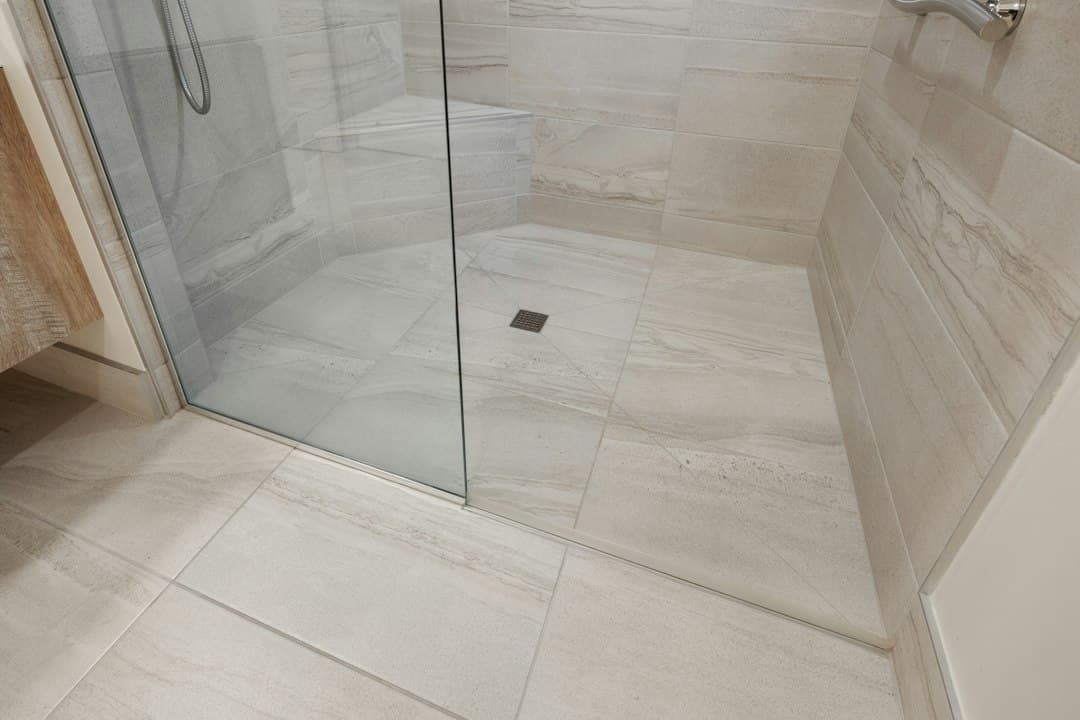
Bathroom floor tile vs LVP is the choice between porcelain or ceramic tile set in thinset and luxury vinyl plank that clicks together over the subfloor. Choosing between them? For most bathrooms, tile wins because it does not swell, warp or trap water when the toilet overflows. LVP costs less and goes in faster. It makes sense for rentals, tight budgets and short-term fixes.
Factor | Porcelain tile (Daltile, MSI, Marazzi) | LVP (LifeProof, COREtec, Shaw Floorte) |
|---|---|---|
Water on the surface | Stays on top; tile and thinset do not swell | Planks resist water, but it runs through seams and edges |
Cost installed | About $10 to $30 per sq ft (as of 2026 pricing) | Usually less; ask a flooring installer |
Install time | Usually 2 to 7 days for floors, including cure time | Often a day for a small bathroom |
Floor heat | Ideal partner for electric floor heat | Limited; check the maker's heat rules |
Feel underfoot | Hard and cool unless heated | Softer and warmer |
Scratches and dents | Very hard to scratch | Wear layer can scratch and dent |
Lifespan | Decades over a solid subfloor | Shorter, and water damage can end it early |
For the full process of putting tile down right, go back to our tile installation floor guide, part of our Tile Installation Complete Guide.
Key Takeaways
- Water: tile handles spills and overflows far better than a floating vinyl floor.
- Cost: tile costs more installed, about $10 to $30 per sq ft based on current Greater Boston rates.
- Heat: tile is the best floor to put over an electric heating cable.
- Lifespan: tile outlasts LVP when the subfloor is solid and flat.
- LVP's place: rentals, tight budgets and floors you plan to redo soon.
Tile vs LVP: What Happens When the Toilet Overflows?
When a toilet overflows on tile, the water sits on top and you mop it up. On LVP, the water finds the seams and the expansion gap at the walls. It then spreads across the subfloor under the planks, where it cannot dry. That is the biggest difference between the two floors in a bathroom.
Water on Tile vs Water on LVP
- Tile: porcelain is nearly waterproof, and thinset and cement-based grout do not swell or rot.
- LVP: the plank resists water, but the floor is many pieces with gaps between them.
- Tile: cleanup is a mop and a fan. The floor dries from the top.
- LVP: water under the planks can stay trapped. Fixing it often means pulling planks to dry the subfloor.
- Tile: we grout with Laticrete Permacolor, a dense cement grout that holds color and resists stains.
Neither floor is a shower pan, and a big leak can still reach the subfloor at the toilet flange. But tile gives you time to clean up before damage starts. In our experience, the floors we tear out after a leak are almost never tile floors that failed on their own.
What Is an Uncoupling Mat?
An uncoupling mat is a thin plastic membrane set between the subfloor and the tile. It lets the subfloor move a little without cracking the tile above. We use Strata Mat, set in Laticrete 254 Platinum thinset, with the tile set over it in Laticrete 253 Gold. That layered build is a big reason a tile floor outlasts vinyl.
Bathroom Floor Tile vs LVP: Cost Installed
Tile costs more to install, but on a small bathroom floor the gap is smaller than you might think. Floor tile installation runs about $10 to $30 per square foot, based on current Greater Boston rates (as of 2026 pricing). LVP usually costs less, so ask a flooring installer for their current pricing.
Sample Cost: A 40 Sq Ft Bathroom Floor
- Tile installation: 40 sq ft at $10 to $30 is about $400 to $1,200.
- Porcelain floor tile (12x12, 12x24) you buy: about $6 per sq ft for the tile.
- Wood-look porcelain plank (6x36, 8x48): about $8 per sq ft, if you want the look of LVP in tile.
- Ceramic floor tile: about $3 per sq ft for a guest bath.
- Leveling, if needed: self-leveling compound adds about $2 to $5 per sq ft.
You buy the tile from the supplier you choose, and we recommend a few. We supply the setting materials. For a deeper look at floor pricing, see our guide to large format tile installation cost.
Install Time: Tile vs LVP
LVP is faster because it floats. The planks click together over the old subfloor, and you can walk on it the same day. Tile takes longer because each layer has to bond and cure. Here is how a tile bathroom floor goes on our jobs.
- Demo and prep: we pull the old floor and check the subfloor for flex and rot.
- Uncoupling mat: we set Strata Mat in thinset over the subfloor.
- Tile: we set the tile, check it for flat, and let the thinset cure.
- Grout and trim: we grout, then finish any metal edge trim to match the grout color.
Most floor jobs take 2 to 7 days, depending on size and prep. The extra days buy you a floor that is bonded to the house, not floating on top of it.
Tile vs LVP: Lifespan and Resale
A tile floor set on a solid, flat subfloor can last for decades. LVP has a printed layer under a clear wear layer on top. Once that wear layer scratches through, the plank shows it. Water damage often ends an LVP bathroom floor long before it wears out.
Long-Term Pros and Cons
- Tile pro: very hard to scratch, and it looks the same years later with normal care.
- Tile con: a cracked tile needs a careful repair, so keep a few spare tiles.
- LVP pro: a damaged plank can sometimes be swapped out.
- LVP con: dents from dropped items and furniture, and fading in strong sun.
- Resale: buyers expect tile in bathrooms in most Greater Boston homes. LVP can read as a budget choice.
We will not quote a resale number, because no honest source can promise one. But a tile bathroom floor is rarely a reason a buyer hesitates.
Tile vs LVP With Floor Heat
If you want a warm floor this winter, tile is the clear pick. An electric heating cable goes in thinset under the tile and warms it evenly. Some LVP makers allow heat with limits, so check the product rules first. Read more in our heated bathroom floor guide.
When Does LVP Make Sense for a Bathroom?
LVP makes sense when cost and speed matter more than lifespan. It is a fair choice in some bathrooms. Here is when we would tell you to go with vinyl, and when to stick with tile.
LVP vs Tile by Situation
- Rental unit: LVP is fast and cheap to replace between tenants.
- Short-term fix: if a full bathroom remodel is a year or two away, LVP can bridge the gap.
- Tight budget: LVP usually costs less installed.
- Kids' bath or busy family bath: tile, because splashes and overflows happen.
- Primary bath you plan to keep: tile, ideally with floor heat.
- Basement bath on a slab: tile with an uncoupling mat handles damp slabs better than a floating floor.
Our Recommendation
We recommend tile for any bathroom floor you plan to live with for years. Pick porcelain for durability and low upkeep, add heat for comfort, and go with LVP only when budget or a short timeline wins. Aguirre Modern Tile holds Massachusetts HIC #655072, carries $1M liability insurance, and has set tile floors across Greater Boston since 2016. For layout ideas, including offsets for plank and rectangular tile, see our 12x24 tile installation patterns guide. We follow the Laticrete manufacturer specification for every thinset and grout we use.
Ready for a bathroom floor that shrugs off water? Send photos and get a free estimate for your bathroom floor tile from Aguirre Modern Tile. Learn more about Aguirre Modern Tile.
Frequently Asked Questions
Is tile or LVP better for a bathroom floor?▾
Is LVP waterproof in a bathroom?▾
Can you put LVP over a heated floor?▾
Does tile cost more than LVP for a bathroom floor?▾
Which lasts longer, tile or LVP?▾
Can you install tile over LVP?▾
Need Floor Tile Installation?
Send us photos and get a same-day estimate.