Tile Installation on Concrete, Plywood or Wood: What Works
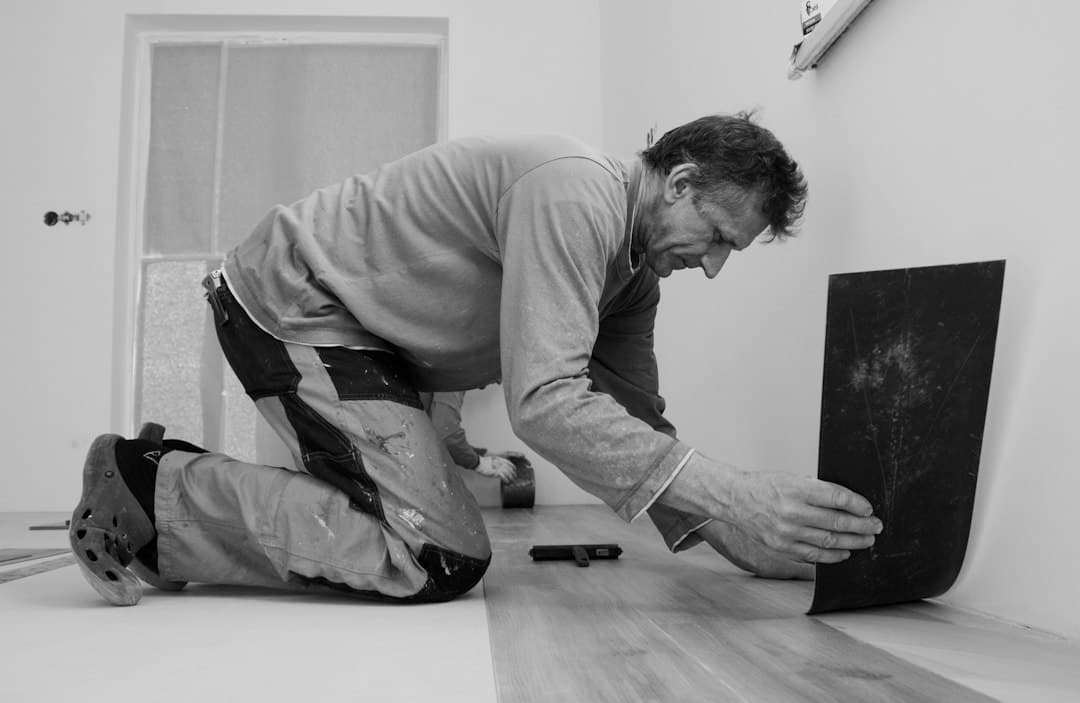
Tile installation on concrete is the process of bonding tile to a cured, flat slab, usually over an uncoupling membrane that keeps slab cracks from breaking the tile. Concrete is one of the best bases for tile. Plywood works too, as long as the floor is stiff enough. Old hardwood is a poor base, and we remove it before tiling. In Greater Boston, floor tile runs about $10 to $30 per square foot installed (as of 2026 pricing), and prep is what moves a job within that range. This page is part of our Tile Installation Complete Guide.
Key Takeaways
- Concrete: yes. Clean it, flatten it and set tile over an uncoupling mat like Laticrete STRATA_MAT.
- Plywood: yes, if it is stiff. TCNA guidance calls for deflection no worse than L/360 for ceramic and porcelain and L/720 for natural stone.
- Old hardwood: no. Strip flooring moves with the seasons and its finish blocks the bond. It comes up first.
- Uncoupling mats do not fix a bouncy floor. Stiffness comes from the joists and plywood.
- Prep costs: Self-leveling compound adds $2 to $5 per square foot (based on current Greater Boston rates).
Tiling a basement slab or an old kitchen floor? Send us photos of the floor for a same-day tile estimate. A photo of any cracks and a shot of the floor from a low angle help us judge flatness.
Can You Tile Over Concrete, Plywood or a Wood Floor?
You can tile over concrete and over a stiff plywood subfloor. You should not tile over old hardwood flooring. The table below gives the short answer for each floor we see in Greater Boston homes.
Existing floor | Can you tile it? | What we add or change |
|---|---|---|
Cured concrete slab | Yes | Clean, flatten, STRATA_MAT over the slab |
Concrete with hairline cracks | Yes | Uncoupling or crack isolation membrane |
Concrete with offset or heaving cracks | Not until fixed | Slab repair first |
3/4-inch plywood subfloor on solid joists | Usually yes | STRATA_MAT set in 254 Platinum |
Thin plywood or old board subfloor | After stiffening | Second layer of plywood, then the mat |
Oak or pine strip hardwood | No | Remove to the subfloor |
The type of tile matters too. Large format porcelain needs a flatter floor than small tile. Our guide on large format tile pros and cons explains why big tiles show every dip.
How Do You Tile Over a Concrete Slab?
Tiling over a concrete slab starts with a clean, flat surface and a plan for cracks. Concrete does not bend like wood, but it shrinks and cracks over time. An uncoupling mat keeps those cracks from passing up into the tile.
- Clean the slab. We scrape off old adhesive, paint and sealers, which block thin-set from bonding.
- Check flatness. We run a long straightedge across the floor and mark high and low spots.
- Level if needed. Low spots get self-leveling compound, such as Custom Building Products LevelQuik or a Mapei leveler.
- Treat the cracks. Hairline shrinkage cracks are normal. Cracks with one side higher than the other need a slab fix first.
- Lay the mat. We bond STRATA_MAT to the slab with 254 Platinum thin-set.
- Set the tile. Tile goes over the mat in 253 Gold, then gets grouted with Laticrete Permacolor.
What Is a Crack Isolation Membrane?
A crack isolation membrane is a fabric or liquid layer applied over concrete cracks before tiling. It stops existing slab cracks from showing up as cracked tile. An uncoupling mat such as STRATA_MAT or Schluter DITRA does the same job across the whole floor. In Boston basements, a mat also helps manage the moisture that comes up through below-grade slabs.
Do Control Joints Matter Under Tile?
Yes. The saw cuts in a slab are control joints, placed where the concrete is meant to crack. TCNA movement joint guidance calls for carrying those joints up through the tile. We place a flexible joint in the tile right above them instead of grouting over them.
How Stiff Does a Plywood Subfloor Need to Be for Tile?
A plywood subfloor must be stiff enough that it barely flexes under foot traffic. Per TCNA guidance, deflection should be no worse than L/360 for ceramic and porcelain tile and L/720 for natural stone. That number depends on joist size, joist spacing and span. Plywood thickness alone does not decide it.
What Is Deflection?
Deflection is how much a floor bends between its supports when weight is on it. L/360 means the floor may bend 1/360th of the joist span. A floor that bends too much cracks tile and grout no matter what goes on top.
- Bounce test: If dishes rattle when someone walks by, the floor is too soft for tile as it stands.
- Second layer of plywood: In older Boston homes we often add a second layer of plywood. It is glued and screwed to the first layer, not into the joists, with seams offset.
- Joist work: If the joists themselves sag, a carpenter sisters or blocks them before we tile.
- Uncoupling mat on top: Once the floor is stiff, STRATA_MAT handles normal seasonal movement.
Uncoupling Mat vs Cement Board Over Plywood
- Height: A mat adds very little. With cement board, TCNA calls for at least 1-1/8 inches of combined subfloor and underlayment.
- Movement: A mat isolates tile from wood movement. Cement board gives a hard base but does not uncouple.
- Weight: Mats are light. Cement board is heavy, dusty to cut and needs taped seams.
Why Is Tiling Over Old Hardwood a Bad Idea?
Tiling over old hardwood is a bad idea because the wood keeps moving and the tile cannot. Strip flooring swells in humid summers and shrinks in dry winters. Boston's seasonal swings make that worse. The tile and grout crack along the board lines.
- Poor bond: Finish and wax on the boards keep thin-set from gripping.
- Cupping boards: Each strip can cup or crown on its own, which pushes tile up.
- Added height: Hardwood plus mat plus tile raises the floor, which causes door and toilet flange problems.
- Hidden damage: Rot or old leaks under the boards stay hidden until the tile fails.
We remove the hardwood down to the subfloor, stiffen it if needed and tile from there. Want the look of wood without the movement? Wood-look porcelain plank runs about $8 per square foot for material. Our comparison of bathroom floor tile vs LVP covers the other option.
What Does Floor Prep Add to the Cost?
Floor prep can add a few dollars per square foot or turn into its own line item. Labor for floor tile runs $7 to $18 per square foot in Greater Boston (as of 2026 pricing), and a rough floor pushes toward the top of that range. Here is how common prep items price out:
Prep item | Typical cost | When you need it |
|---|---|---|
Laticrete STRATA_MAT uncoupling membrane | Part of our standard floor build | Every unheated slab and plywood floor we tile |
Self-leveling compound (LevelQuik, Mapei) | $2 to $5 per sq ft | Slabs or subfloors with dips and humps |
Second layer of plywood | Priced after we see the floor | Thin or soft wood subfloors |
Hardwood removal | Priced after we see the floor | Any tile job over strip flooring |
Radiant floor heat | About $10 to $15 per sq ft | Cold slabs and bathroom floors |
A heated floor is a common add-on over cold basement slabs. We install one cable sized to the open floor, and it replaces the uncoupling mat. Read more in our heated bathroom floor guide. Large tiles need the flattest floors, so check our large format tile installation cost breakdown before you choose 24x48 porcelain. Layout matters too, and 12x24 tile installation patterns like a 1/3 offset are more forgiving on imperfect floors.
Ready for Tile Installation on Concrete or Plywood?
Good tile installation on concrete, plywood or any subfloor depends on what is underneath: a clean, flat and stiff base with an uncoupling mat on top. Aguirre Modern Tile has prepped and tiled floors across Greater Boston since 2016, with MA HIC #655072 and $1M in liability insurance. Ready to find out what your slab or subfloor needs before tile goes down? Send us photos of your floor and get a same-day tile estimate.
Back to Tile Installation Floor: Complete Guide to Getting It Right
Frequently Asked Questions
Can you put tile directly on concrete?▾
Can you tile over plywood?▾
Can you lay tile over a hardwood floor?▾
How much does floor prep add to a tile job?▾
Does an uncoupling membrane fix a bouncy floor?▾
Need Floor Tile Installation?
Send us photos and get a same-day estimate.