Linear Drain vs Center Drain: Cost, Slope and Tile Choices
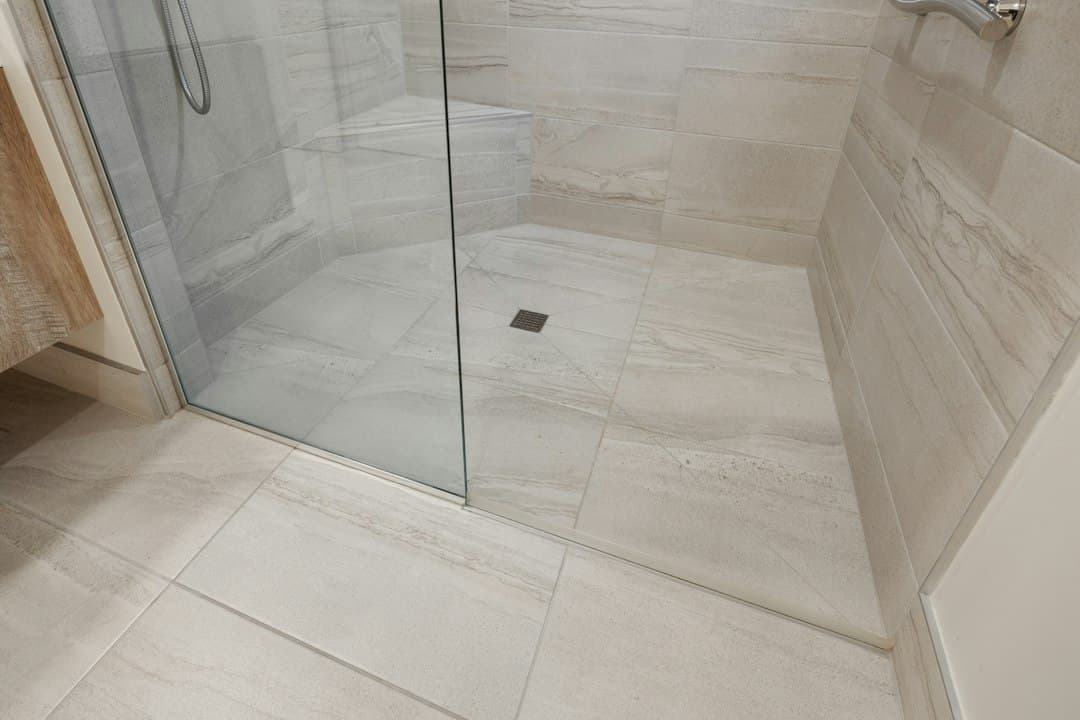
Linear drain vs center drain is the choice between one long, narrow drain along a wall and a small round or square drain in the middle of the floor. Choosing between them? A center drain costs less and usually stays in the old drain spot, so it fits most standard showers and tub-to-shower swaps. A linear drain costs more and often needs the drain moved, but it lets the floor slope one way. That makes it the right pick for curbless showers and large format floor tile.
Factor | Center drain (Schluter Kerdi-Drain) | Linear drain (Schluter Kerdi-Line) |
|---|---|---|
Floor slope | Four slopes meeting at the drain, like a shallow funnel | One flat plane tilting toward the drain |
Best floor tile | 2x2, hex or penny mosaic, about $10 per sq ft material | 12x24 or 24x48 porcelain, about $8 per sq ft material |
Drain location | Often reuses the existing drain | Usually moved to a wall or the entry by a plumber |
Curbless builds | Possible, but harder | The standard choice |
Cost | Lower | Higher drain body plus plumbing work |
Cleaning | Small strainer, easy to reach | Long grate and channel to rinse out |
Key Takeaways
- Slope is the real difference. Both need about 1/4 inch of fall per foot. A center drain spreads it over four slopes. A linear drain uses one.
- Big tile wants a linear drain. Large porcelain cannot bend to follow a four-way slope without lots of cuts.
- Center drains save money. They usually reuse the drain spot, and the drain body costs less.
- We connect the Kerdi drain ourselves. A plumber is only needed to move the drain line.
- Shower pricing: a full shower tear-out and rebuild runs $5,000 to $7,000+ in Greater Boston (as of 2026 pricing).
Not sure which drain fits your shower and your tile? Send us photos of your shower floor for a same-day estimate on a linear or center drain tile shower. Tell us the tile size you like, and we will tell you which drain suits it.
This article focuses on drains. For the full build, go Back to Tile Shower Installation or read our Bathroom Tile Installation Complete Guide.
Linear Drain vs Center Drain: How Does the Slope Change?
The slope changes shape, not steepness. Both drains need about 1/4 inch of fall for every foot of floor. A center drain makes the floor dish toward one point. A linear drain makes the whole floor tilt toward one edge.
Center drain slope
- Four triangles of floor slope down to the drain from each wall.
- The lines where the triangles meet, called valleys, need careful tile cuts.
- The floor is highest at the walls and lowest in the middle.
Linear drain slope
- One flat plane tilts toward the drain, like a gentle ramp.
- No valleys, so the floor stays flat side to side.
- The high edge sits opposite the drain, usually at the entry or the far wall.
Here is the math on a 5-foot shower. A center drain in the middle drops about 2.5 feet from each wall, so it needs roughly 5/8 inch of fall. A linear drain at the back wall drops the full 5 feet, so it needs about 1.25 inches. That deeper fall is fine in a curbed shower. In a curbless shower, the floor gets recessed to make room for it. Our is a curbless shower worth it article explains how we recess the floor.
We build the slope with a Schluter Kerdi foam tray or a sloped mortar bed. Trays come pre-sloped for either drain type. A mud pan can be shaped to any drain spot. See kerdi shower pan vs mud for that choice.
Why Does Big Tile Need a Linear Drain?
Large tile needs a linear drain because a big flat tile cannot follow a four-way slope. A 24x24 tile laid across a center drain's valley would rock on the ridge or leave edges sticking up. A linear drain gives you one flat, tilted plane, and a big tile sits on it like it sits on any floor.
Large format porcelain vs mosaic on a shower floor
- Large format porcelain (12x24, 24x48): fewer grout lines and a modern look. It needs a linear drain and a very flat floor. Material averages about $8 per square foot.
- Hex or penny mosaic: mesh-backed sheets bend to follow a center drain's curves. More grout joints mean more grip underfoot, and more grout to clean. Material averages about $10 per square foot.
- Glass mosaic (1x1, 2x2): works on either drain. It needs white thinset and unsanded grout. Material averages about $22 per square foot.
With a center drain, 12x12 tile can work if we cut each tile along the valleys. That is called an envelope cut. It works, but it adds labor and grout lines. If you love a big tile on the floor, budget for a linear drain from the start. You pick and buy the tile, and we recommend suppliers.
Can a linear drain go at the shower entry?
Yes. A linear drain at the entry catches water before it leaves the shower, which is useful on curbless builds. A drain at the back wall hides better and keeps the floor flat near the door. We pick the spot based on where the spray lands and where the drain line can run.
Linear Drain vs Center Drain: Which Is Easier to Clean?
A center drain is a little easier to clean day to day. Its strainer is small, so you lift it, pull out the hair and rinse. A linear drain has a long grate and a channel underneath. Hair spreads along the channel, so you lift the full grate and rinse the whole length.
- Center drain care: lift the cover every week or two. A hair catcher under the cover helps.
- Linear drain care: lift the grate, pull the hair basket if it has one, and rinse the channel.
- Tile-in grates: both types offer a cover that takes a piece of your floor tile. It looks clean, but you lose the grip of a metal grate.
Either drain clogs if hair builds up. A slow drain in a curbless shower matters more, because there is no curb to hold water back. That is the one maintenance point to take seriously with a linear drain.
How Much More Does a Linear Drain Cost?
A linear drain costs more for two reasons. The drain body is longer and more complex than a center drain. And it usually sits in a new spot, so a plumber has to move the drain line. We connect the Kerdi drain to the tray or mud pan ourselves. The plumber's part is only the move.
The rest of the shower costs about the same either way. A full shower tear-out and rebuild runs $5,000 to $7,000+ for labor and setting materials (as of 2026 pricing). Benches, stone sills and bigger showers push it up. Plumber and glass are extra. Most take 4 to 8 working days. If you are replacing a tub, our tub to shower conversion cost article covers the full budget.
Which Drain Should You Choose?
The right pick between a linear drain vs center drain comes down to your tile, your floor and your budget:
- Tight budget or a straight tub swap: center drain. It often stays in the old spot and costs less.
- Mosaic or hex floor: center drain. Small tile follows the slope easily.
- Large format porcelain floor: linear drain. It is the only clean way to use big tile.
- Curbless or aging-in-place shower: linear drain. It keeps the recess shallow.
- Easiest cleaning: center drain, by a small margin.
Aguirre Modern Tile has built showers in Greater Boston since 2016. We are a registered Massachusetts home improvement contractor (HIC #655072) and fully insured. Ready to pick the right drain for your new shower? Send us photos and get a same-day estimate for a tile shower with a linear or center drain.
Frequently Asked Questions
Is a linear drain better than a center drain?▾
Does a linear drain cost more than a center drain?▾
Can you use large tile with a center drain?▾
Do linear drains clog more?▾
How much slope does a shower floor need?▾
Need Shower Tile Installation?
Send us photos and get a same-day estimate.