Shower Niche Dimensions: Size, Height and Install Cost
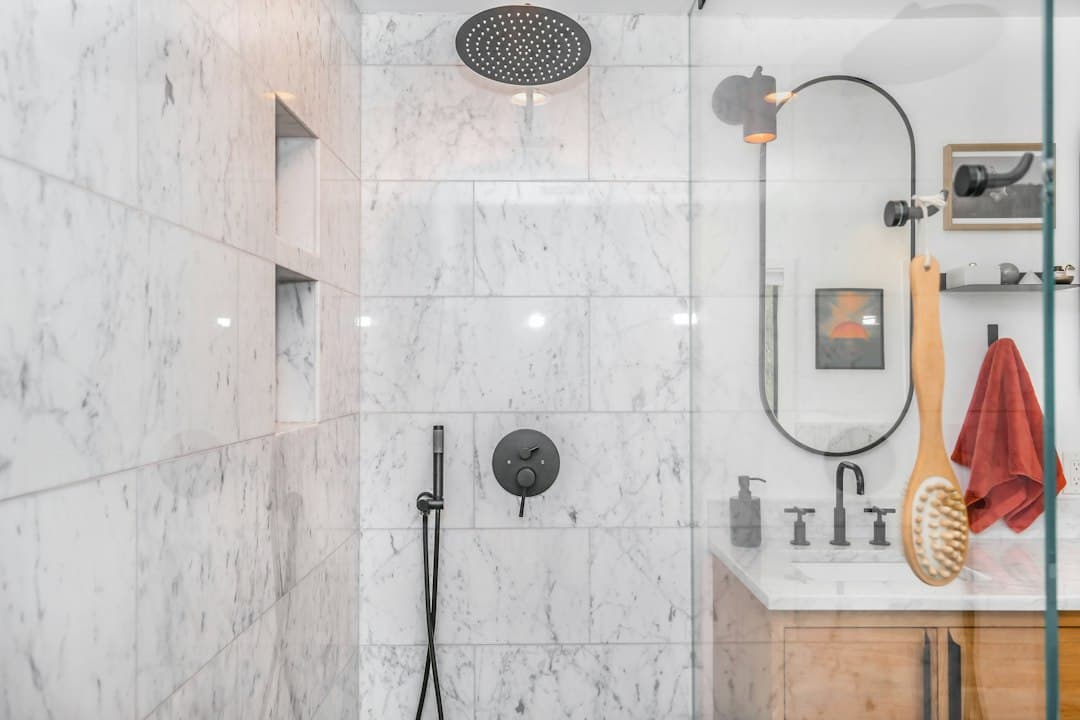
A shower niche is a recessed shelf built into the shower wall between the studs, so bottles sit flush instead of on a rack. Most shower niche dimensions land near 12 inches wide, 12 to 24 inches tall and about 3.5 inches deep. That is what fits in one stud bay of a standard 2x4 wall. The bottom shelf usually sits 48 to 60 inches above the shower floor. At Aguirre Modern Tile, installing a niche costs $400 (as of 2026 pricing), and it gets the same waterproofing as the rest of the wall.
Key Takeaways
- Standard size: about 12 inches wide by 12 or 24 inches tall. One stud bay sets the width.
- Depth comes from the wall. A 2x4 stud is 3.5 inches deep, so most niches give you about 3 to 3.5 inches of shelf.
- Height: the bottom of the niche usually sits 48 to 60 inches off the shower floor. Set it for the person who showers most.
- Cost: we install a niche for $400. You buy the tile. We bring the setting materials.
- Location: skip the plumbing wall and exterior walls when you can.
- Waterproofing: every face gets RedGard, and the sill slopes toward the shower.
Adding a niche to a new tile shower or a tub-to-shower conversion? Send us photos of your shower walls for a same-day niche and shower tile estimate. One picture of each wall and the valve tells us where a niche can go.
This article covers niches only. For the full build, go Back to Tile Shower Installation or read our Bathroom Tile Installation Complete Guide.
What Are Standard Shower Niche Dimensions?
Standard shower niche dimensions come from the wall framing, not a design catalog. Studs in most homes sit 16 inches apart on center. That leaves about 14.5 inches of open space between them. Backer board and tile on each side of the opening take up another inch or two, so most finished niches measure close to 12 inches wide.
Niche size (W x H) | What it holds | Framing needed |
|---|---|---|
12 x 12 in | 3 or 4 bottles | One stud bay |
12 x 24 in with a shelf | Tall bottles on two levels | One stud bay |
24 x 12 in | A full row of bottles side by side | Two bays, one stud cut and headered |
Two stacked niches | Separate shelves for two people | One bay with extra blocking |
Older Boston homes often have studs at odd spacing. In a house from the 1920s, the bay you want might be 13 inches or 18 inches wide. We measure once the wall is open and size the niche to the real framing.
How deep is a shower niche?
A shower niche is usually about 3 to 3.5 inches deep. A 2x4 stud is 3.5 inches deep, and the niche fills that cavity. That depth holds standard shampoo bottles. If you want a deeper niche for big pump bottles, the wall needs 2x6 framing or a bump-out into the room behind it.
What height should a shower niche be?
Most people set the bottom of the niche 48 to 60 inches above the shower floor. That puts bottles between chest and shoulder height for most adults. A second, lower niche works well for kids or for shaving legs. Keep the niche out of the direct spray from the shower head, or water will pound the bottles and the sill all day.
We also line the niche up with the tile layout. With 12x24 porcelain, we lay out the wall first. Then we nudge the niche an inch up or down so its edges land on a grout line. That avoids thin slivers of tile around the opening.
How much does a shower niche cost?
We install a recessed niche for $400 as part of a shower build (as of 2026 pricing). That covers the framing, backer board, waterproofing and setting. You supply the tile, and a niche takes very little. A 12 x 24 niche lined on all sides needs under 4 square feet. Even a glass mosaic, at about $22 per square foot for the material, adds little to the bill. A full shower tear-out and rebuild runs $5,000 to $7,000+ for labor and setting materials (as of 2026 pricing). Benches, stone sills and bigger showers push it up. Plumber and glass are extra. A tub surround tear-out and retile runs $4,300 to $5,000, and a niche adds $400.
Where Can a Shower Niche Go?
A niche can go in any wall bay that is free of pipes, wires and vents. The best spot is an interior wall that backs onto a closet, hallway or bedroom. Here is how each wall usually works out:
- Interior wall: best choice. Most bays are empty, and nothing cold sits behind the niche.
- Plumbing wall: usually no. The valve, supply lines and often a vent pipe run up this wall. A niche above the valve only works if that bay is clear.
- Exterior wall: avoid it. Cutting a niche removes insulation. Freeze-thaw cycles in Boston winters stress the waterproofing, and the cold back of the niche can collect condensation.
- Wall with wires or ducts: sometimes, if an electrician or HVAC tech moves them first.
We find out what is inside the wall during demo, when the studs are open. Until then, the niche spot is a best guess. A niche wider than one bay means cutting a stud and framing a small header across the top. That is normal carpentry for us, and it keeps the wall strong.
Shower Niche vs Ledge vs Corner Shelf: Which Is Better?
A recessed niche gives the cleanest look and the most storage. A ledge is the best answer when no wall can take a niche. A corner shelf is the simplest option, but it holds the least. This table compares the three with the materials we actually use:
Option | Typical material | Pros | Cons |
|---|---|---|---|
Recessed niche | Cement board and RedGard, tiled to match the wall, edged with Schluter metal trim | Flush, holds the most, nothing sticks out | Needs an empty stud bay; more corners to waterproof |
Ledge on a half wall | Tile, or a solid Anatolia Marmiline marble cap | Works on plumbing or exterior walls; fits a long row of bottles | Needs a built-out wall; takes some floor space |
Corner shelf | Solid marble or quartz corner piece set into a grout joint | Fast, no framing, fine for a razor or one bottle | Small; must go in during tiling, hard to add later |
On a niche or a ledge, we like a solid stone sill instead of cut tile. One piece of marble has no grout joints on the flat surface where water sits. It is the same kind of stone we use on curbs, covered in our guide to shower curb height and caps. Marble needs sealing, so plan to reseal it once a year.
Niche vs ledge: which should you pick?
- Pick a niche if an interior wall has an open bay and you want a clean, built-in look.
- Pick a ledge if the only free wall is the plumbing wall or an exterior wall.
- Pick a corner shelf for a small add-on, like a spot for a razor near the floor.
How Do You Waterproof a Shower Niche?
A shower niche needs waterproofing on every face: back, sides, top and sill. It must tie into the wall membrane with no gaps. A niche is a box cut into the waterproof layer, so it adds eight corners where leaks like to start. Here is how we build one:
- Frame and board. We frame the opening and line every face with cement board.
- Slope the sill. The bottom shelf tilts slightly toward the shower, so water drains out instead of pooling.
- Treat the corners. Seams and inside corners get extra attention before the full coat.
- Roll on RedGard. We coat the niche and the whole wall with RedGard liquid membrane in one continuous layer. It goes on pink and dries red, so missed spots are easy to see.
- Tile and trim. We tile the inside, finish the metal edge trim to match the grout, and grout with Laticrete Permacolor.
A flat sill is the most common niche mistake we see on repair calls. Water sits on it, soaks the grout, and works into the wall. Prefab foam niche kits exist, and they can work well. But the seam where the kit meets the wall still needs a careful seal. Our RedGard vs Kerdi article explains why we roll RedGard on walls instead of hanging full sheet membrane.
A niche adds a little time to the build because each face gets boarded, coated and tiled. For a full schedule, see how long does it take to tile a shower. Most showers take 4 to 8 working days, niche included.
Ready to Plan Your Shower Niche?
Good shower niche dimensions start with the wall you have: about 12 inches wide, 12 to 24 inches tall and 3.5 inches deep, set 48 to 60 inches up. Put it on an interior wall, slope the sill and waterproof every face. Aguirre Modern Tile has built showers across Greater Boston since 2016. We are a registered Massachusetts home improvement contractor (HIC #655072) and fully insured. Send us photos of your shower and get a same-day estimate for a tile shower with a built-in niche.
Frequently Asked Questions
What is the standard size of a shower niche?▾
How deep should a shower niche be?▾
How high should a shower niche be?▾
Can a shower niche go on an exterior wall?▾
How much does it cost to add a shower niche?▾
Can you add a niche to an existing tiled shower?▾
Need Shower Tile Installation?
Send us photos and get a same-day estimate.